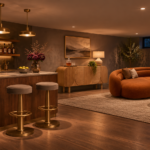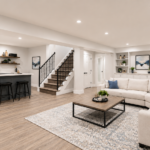
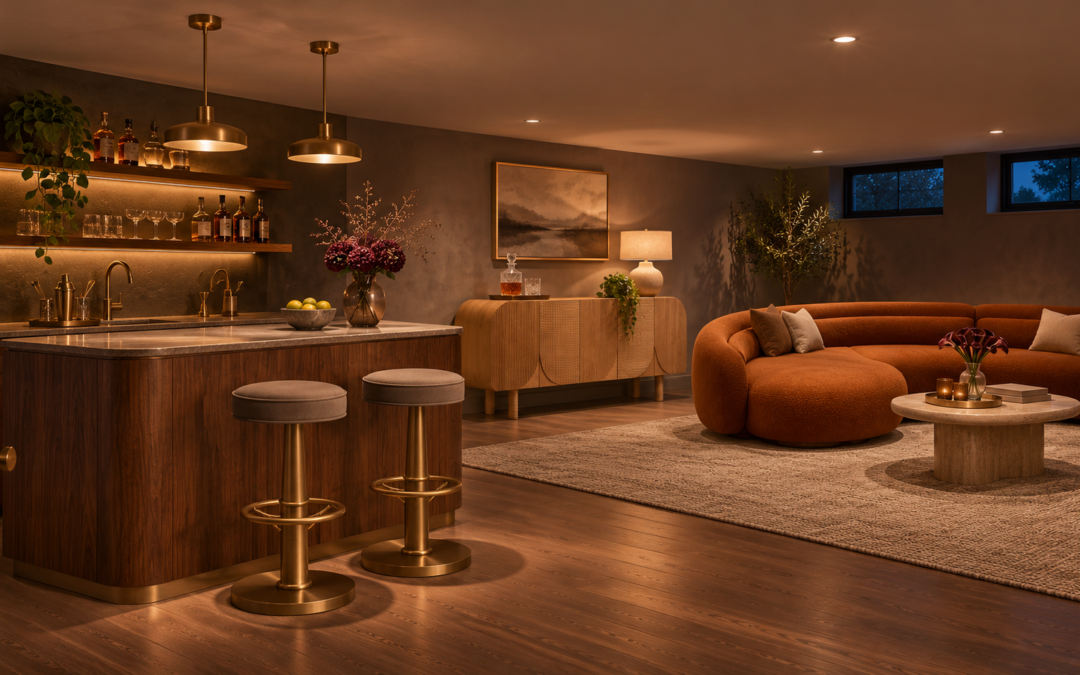
How to furnish a basement bar that feels like a real cocktail lounge, from the stools at the counter to the back-bar storage and the seating around it.
Summary: Key Takeaways
- A basement bar lives or dies on atmosphere, and furniture is what turns a counter and a few shelves into a room people want to stay in.
- Start with the three pieces every home bar needs: seating at the counter, storage behind it, and a comfortable place to sit nearby.
- Match stool height to your counter: counter-height stools for a 36-inch counter, bar-height stools for a 42-inch bar.
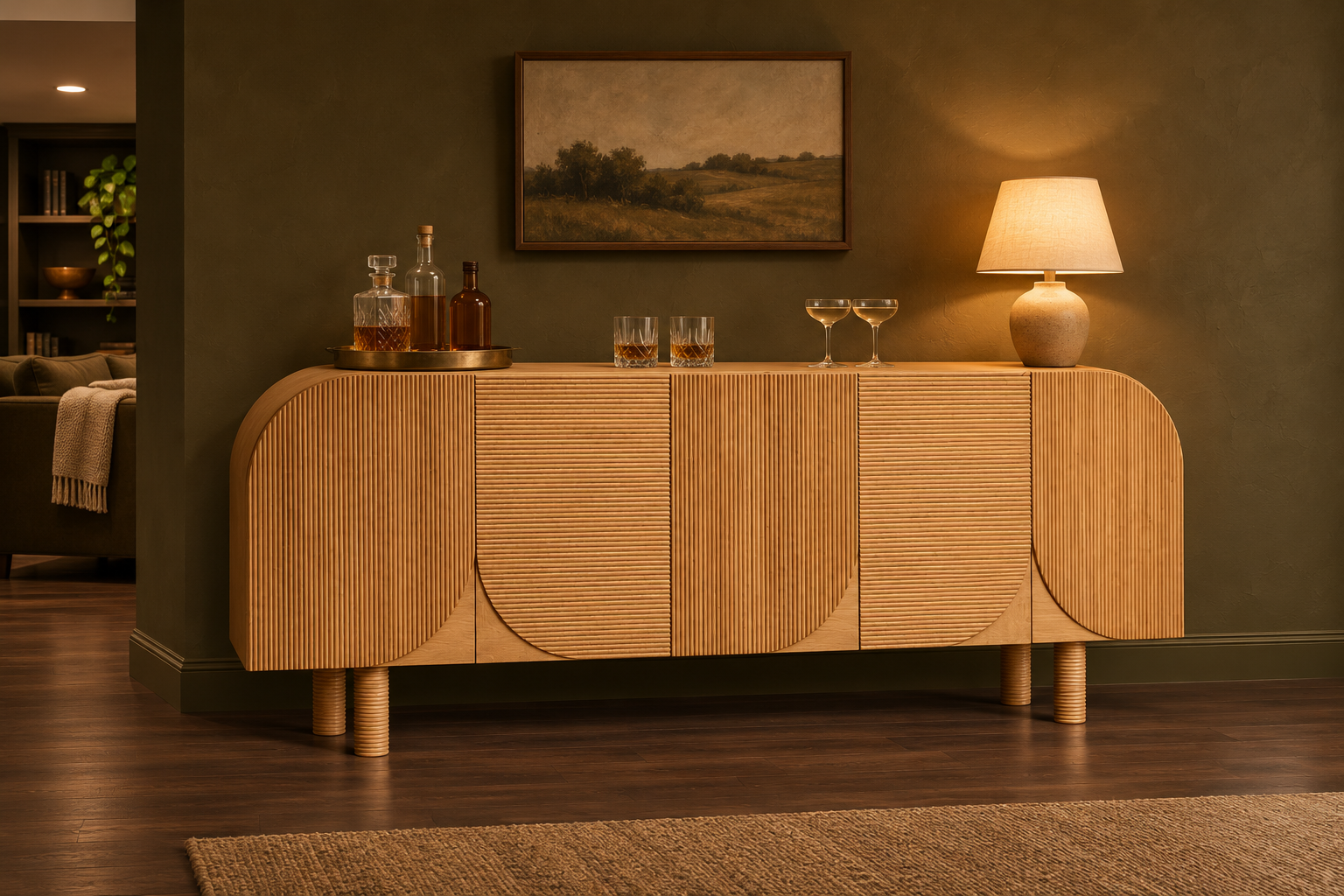
- A credenza or sideboard makes an elegant back bar, holding bottles, glassware, and tools while anchoring the whole wall.
- Pick one palette and a couple of fabrics so the stools, storage, and lounge seating read as a set.
- For a theme that fits a bar perfectly, Tom Collins Home builds furniture named after classic cocktails, from a Singapore Sling stool to a Negroni credenza.
A great basement bar is not really about the bar. It is about the feeling you get walking down the stairs: low light, a comfortable stool, a shelf of bottles that catches the eye, and a place to settle in with friends. You can build the nicest counter in the world, but it is the furniture around it that decides whether the room feels like a finished cocktail lounge or an unfinished basement with a counter in it.
This guide walks through furnishing a basement bar the way a designer would: seating at the counter, storage behind it, and a lounge area to sink into, all tied together by a single look. For the bigger picture on layout and build, start with our basement bar ideas guide, then come back here to furnish it.
A detail worth borrowing
If you want a theme that was practically made for a home bar, it is worth knowing that Tom Collins Home names its furniture after classic cocktails and famous bars. Their tagline, “inspired by the classics, crafted to perfection,” runs right through the catalog: a Singapore Sling barstool, a Negroni credenza, an Old Fashioned sideboard. It is a small thing, but in a basement bar it lands perfectly, where a Sazerac stool can sit under an actual Sazerac poured at the counter. We point to a few of their pieces below where they fit the design, but the ideas work with whatever furniture you choose.
Start With the Feeling, Not the Furniture
Before you buy anything, decide what kind of room you want. A lively sports-and-game-day bar, a quiet speakeasy for a nightcap, and a bright entertaining space all call for different furniture. That single decision tells you how much seating you need, whether you want plush or sleek, and which colors and materials will carry the mood.
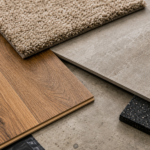
Lighting and flooring set the stage for everything the furniture does, so plan them together. Our basement lighting ideas and best flooring for basements guides cover the groundwork, from warm, dimmable light to moisture-smart floors that stand up to a below-grade room.
Seating: Pull Up a Stool
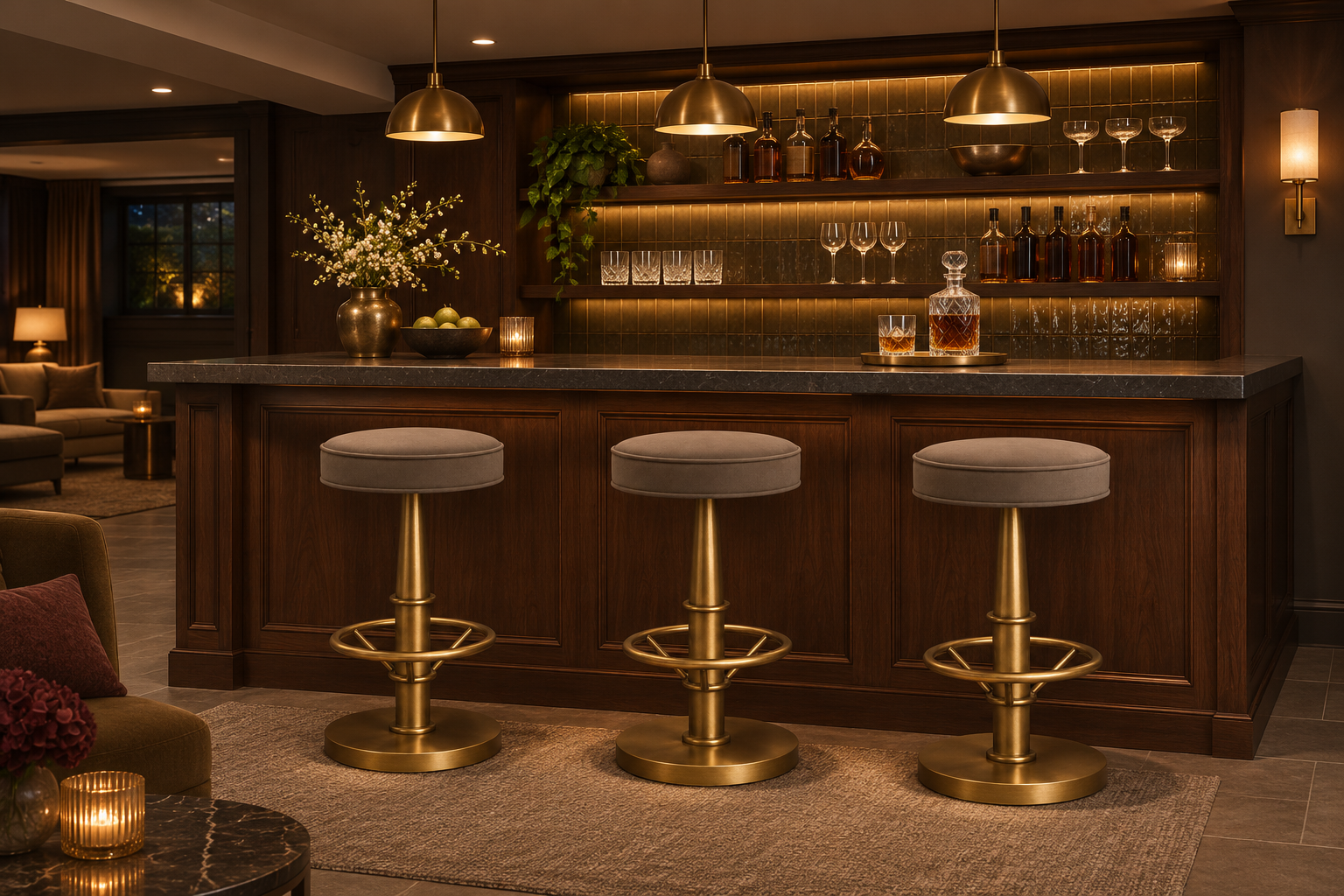
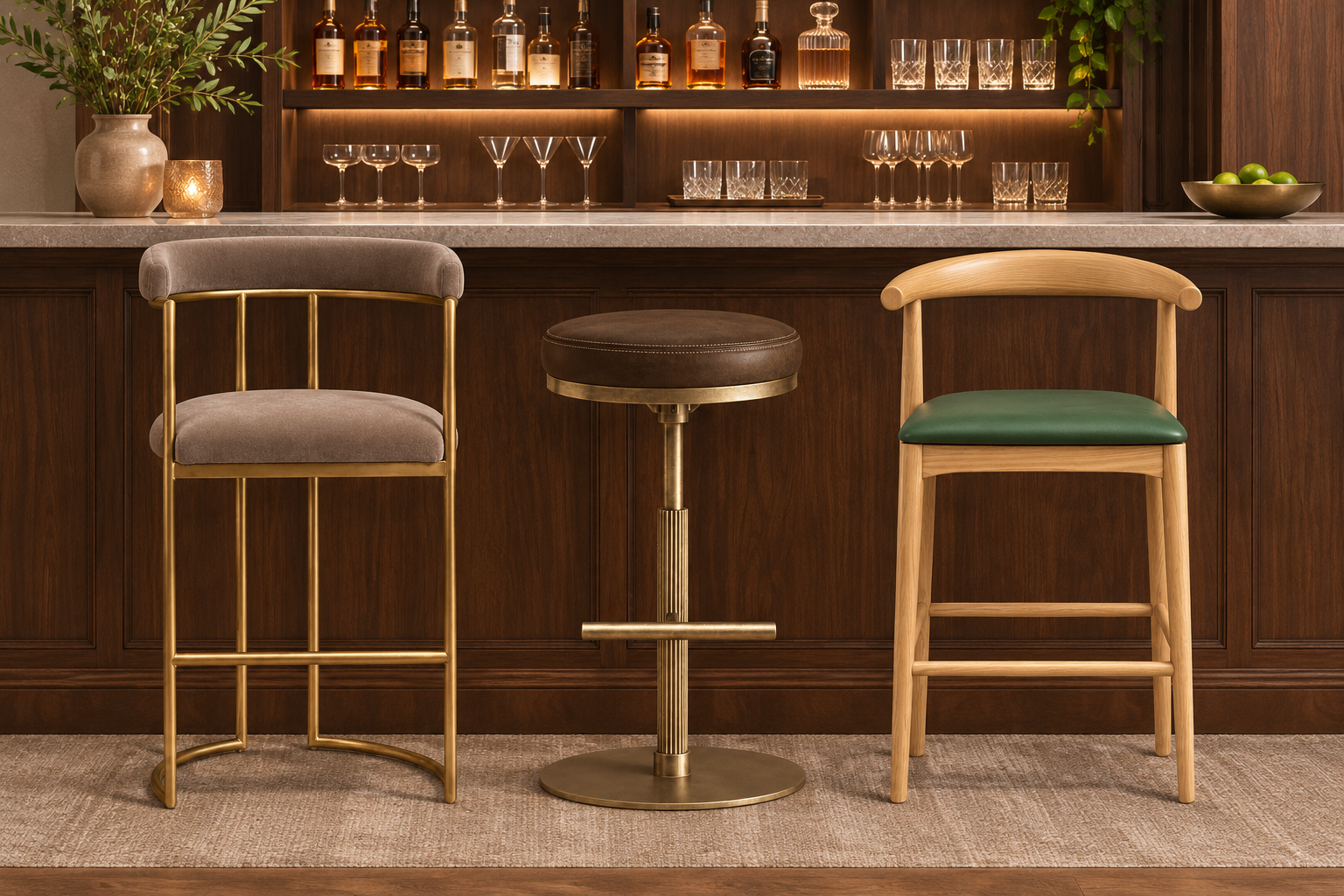
Stools are the heart of a home bar and usually the first furniture a guest touches, so they are worth getting right. The most important detail is height. Measure your counter and match it: a standard 36-inch counter takes counter-height stools (seats around 24 to 26 inches), while a taller 42-inch bar takes bar-height stools (seats around 29 to 31 inches). Leave roughly 24 inches of width per seat so people are not bumping elbows.
After height, think about comfort and upkeep. Backless stools tuck away neatly and keep sightlines open in a small space, while stools with backs invite people to linger. Velvet and bouclé feel plush and modern; a wipeable surface is friendlier if drinks tend to travel. Swivel seats make a tight bar easier to get in and out of.
For a basement bar specifically, the cocktail-named lineup from Tom Collins Home is a natural fit. A few bar and counter stools to build around, from easygoing to statement:
| Stool | Style notes | Approx. price |
|---|---|---|
| El Floridita Backless | Compact backless stool in velvet | from $275 |
| El Floridita | Simple, low-cost classic | $295 |
| Sazerac | Clean lines, easy to mix and match | $495 |
| Singapore Sling | Velvet and chrome, retro-modern | $545 |
| Clover Club | Upholstered and elegant | $595 |
| Last Word | Sculptural statement counter stool | $795 |
Want more options in the same spirit? The Happy Hour backless stool, the Dark & Stormy counter stool, the Rob Roy, and the tiki-leaning Trader Vic’s all cover different looks. For sizing help across any brand, see our bar stool buying guide.
The Back Bar: Storage With Character
Behind every good bar is a place to keep the bottles, glassware, shakers, and napkins. In a basement bar, a credenza or sideboard is one of the smartest moves you can make: it stores everything out of sight, gives you a surface to display a few bottles and a lamp, and anchors the whole back wall like a piece of furniture rather than a row of cabinets. Look for one with a mix of doors and drawers, and enough top surface to work on.
This is another place the cocktail theme pays off. Tom Collins Home’s credenzas and sideboards carry names a bartender will recognize. The Negroni Credenza and the Old Fashioned Sideboard make striking back bars, the French 75 Credenza and Sidecar Credenza lean more formal, and the Milk & Honey nods to one of the most famous cocktail bars of all. There is even a John Collins Credenza, the Tom Collins’ close sibling. If you are starting small, the flat-packed Jack’s Bar Credenza comes in around $995.
Pair the credenza with the counter and countertop you already have in mind. Our basement bar cabinet and countertop ideas guide covers how to coordinate storage and surfaces so the back bar and the bar itself feel like one piece.
The Lounge Zone: Somewhere to Settle In
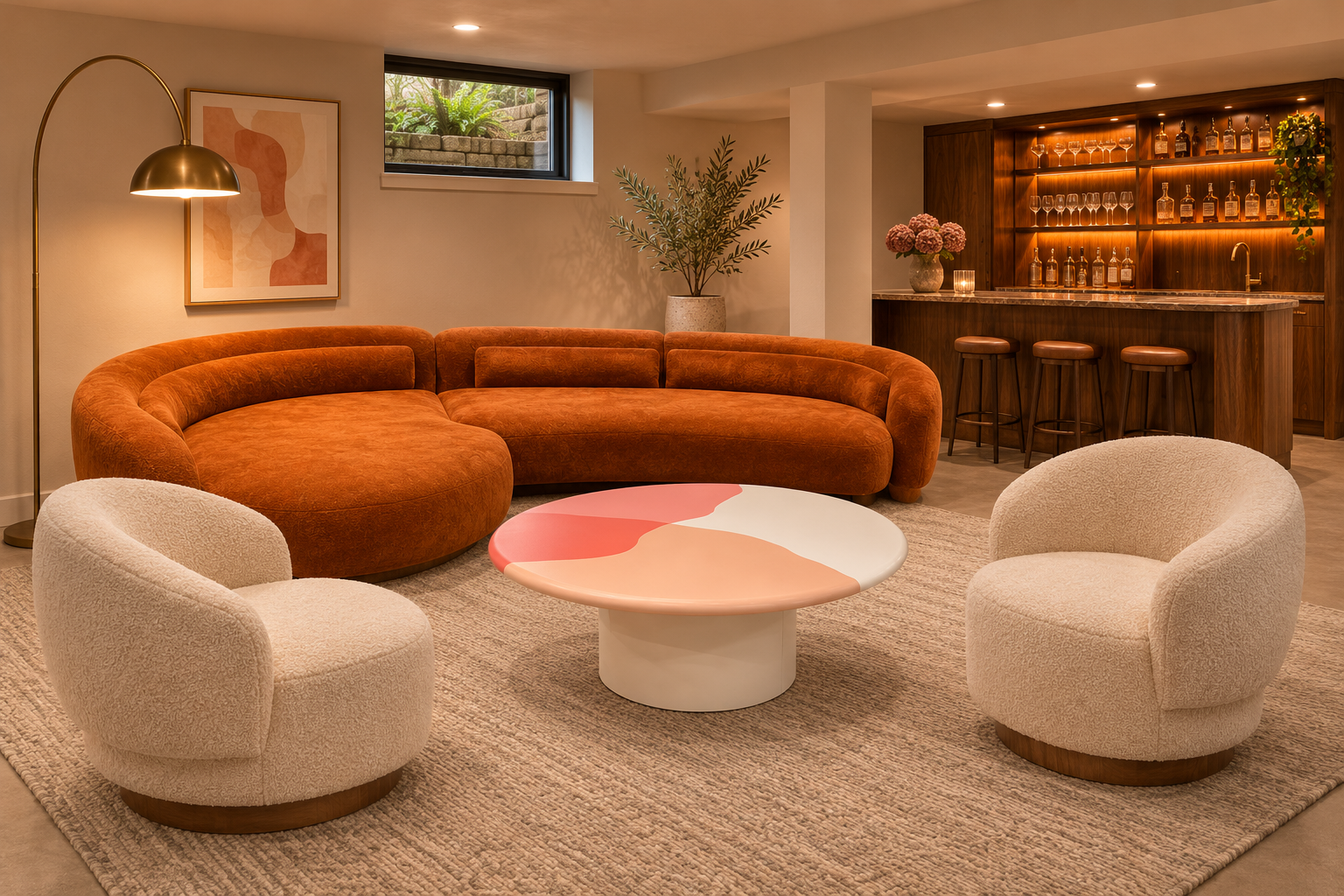
A bar you can only stand at empties out fast. The rooms people love have a soft landing nearby: a sofa or a pair of lounge chairs, a low table for drinks, and maybe a booth-style bench for a crowd. Even in a compact basement, carving out a small seating area beside the bar doubles how the room gets used, from game nights to a quiet drink after work.
Tom Collins Home carries the soft seating to match, and the cocktail names continue: the Algonquin and Dark & Stormy sofas and the Angel Face sectional headline the lineup. For a built-in look, a banquette turns a corner into a booth that seats more people in less space, and a side or coffee table gives everyone somewhere to set a glass. A couple of occasional chairs can round out the conversation.
If your basement does double duty as a guest space, the same brand runs all the way to beds and dressers, so a nearby guest room can share the look. The point is not to fill the room, but to give the bar a comfortable orbit.
Tie It Together: Color, Fabric, and Cohesion
The difference between a furnished room and a designed one is cohesion. Pick one palette and repeat it: a couple of main colors, one or two accent tones, and no more than two or three fabrics across the stools, storage, and seating. Velvet and bouclé read warm and modern; wood and brass add that classic bar feel; a single bold accent, like a deep green or a burnt orange, keeps the space from feeling flat.
If you like the cocktail theme, it even extends to the finishes. Tom Collins Home groups fabrics into color stories with names like Mojito Green, Curaçao & Hpnotiq, Espresso & Cognac, and Rosé & Blush, which makes it easy to carry one palette from the stools to the sofa. Whatever you choose, order fabric swatches before you commit, since colors read differently under basement lighting than they do on a screen.
Finish with the small stuff that makes a bar feel lived-in: a tray and a few good bottles on the credenza, a mirror or art behind the bar, a rug to define the lounge, and glassware on open shelves. Keep it curated rather than crowded, and let a few strong pieces carry the room.
Bringing Your Basement Bar Together
Furnishing a basement bar comes down to three jobs: give people a seat at the counter, give the bottles a home behind it, and give everyone a comfortable place to land nearby. Choose pieces that fit your space and share one clear look, plan them alongside your lighting and flooring, and the room will feel like a genuine cocktail lounge rather than a basement with a counter. If the cocktail-named approach appeals to you, it is a charming way to tie the whole theme together, right down to the stool you are sitting on.
Frequently Asked Questions
What furniture do I need for a basement bar?
At a minimum, seating at the counter (bar or counter stools), storage behind the bar (a credenza, sideboard, or cabinets), and a comfortable spot nearby such as a sofa, lounge chairs, or a banquette. A low table and good lighting round it out.
What height bar stool do I need?
Match the stool to your counter. A 36-inch counter takes counter-height stools with seats around 24 to 26 inches; a 42-inch bar takes bar-height stools with seats around 29 to 31 inches. Allow about 24 inches of width per seat.
Can I use a credenza as a home bar?
Yes. A credenza or sideboard makes an excellent back bar or even a standalone bar: it hides bottles and tools, offers a display and work surface on top, and looks like furniture rather than storage. Choose one with a mix of doors and drawers and a durable top.
What is Tom Collins Home?
Tom Collins Home is a modern furniture brand whose pieces are named after classic cocktails and famous bars, which makes them a natural fit for a home bar. They carry everything from bar stools and credenzas to sofas and beds, with a showroom in Westminster, California. You can browse the full range at tomcollinshome.com or see their showroom details.
How do I make basement bar furniture look cohesive?
Pick one palette and limit yourself to two or three fabrics across the stools, storage, and seating. Repeat a couple of accent tones, order swatches to check colors under your basement lighting, and let a few strong pieces anchor the room instead of filling every corner.
Keep planning your basement bar with our related guides:
basement bar ideas, basement bar cabinet and countertop ideas, and basement lighting ideas.