Table of Contents
- Why Basement Flooring Is a Special Case
- Basement Flooring Options: Detailed Pros and Cons
- Luxury Vinyl Plank and Vinyl Tile (LVP / LVT)
- Laminate Flooring
- Ceramic and Porcelain Tile
- Engineered Hardwood
- Carpet and Carpet Tiles
- Polished, Sealed, or Stained Concrete
- Epoxy and Resinous Coatings
- Rubber Flooring
- Basement Flooring at a Glance
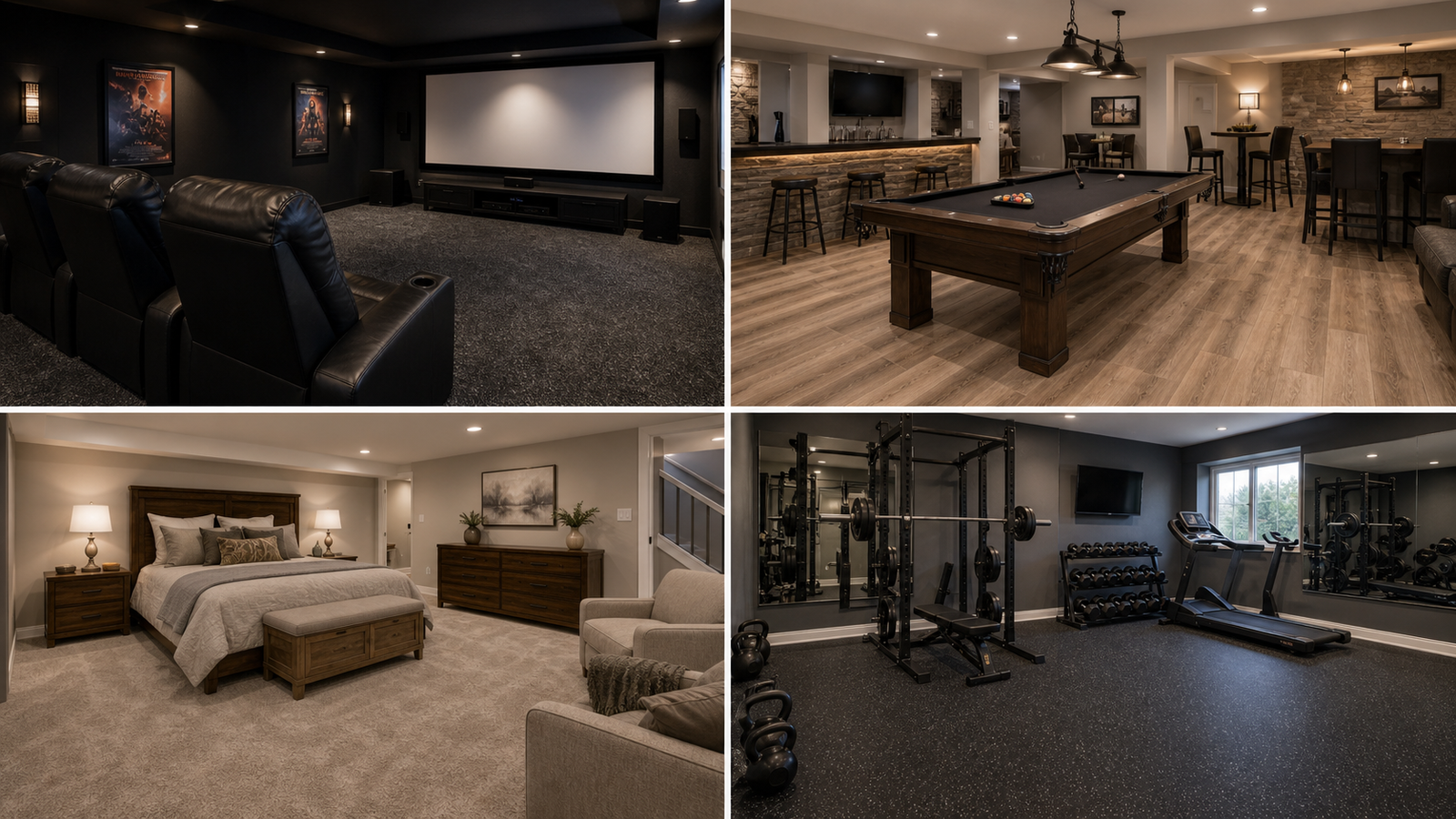
- Choosing Flooring by Basement Use
- Home Theater
- Game Room or Rec Room
- Guest Bedroom or Legal Bedroom
- Basement Studio or Accessory Dwelling Unit
- Home Gym
- Basement Bar
- Preparation and Installation Tips
- Bringing It All Together
- Frequently Asked Questions
Pros, cons, costs, and moisture realities for every basement floor — from home theaters and game rooms to bedrooms, studios, and bars.
Summary: Key Takeaways
- Basements sit below grade, so moisture and temperature should drive your flooring choice.
- Test the slab for moisture and address it before installing anything.
- Luxury vinyl plank, tile, and sealed concrete handle dampness best.
- Carpet and solid hardwood are the riskiest choices below grade.
- Match flooring to the room's use, comfort needs, and maintenance level.
- Legal bedrooms and studio units need flooring planned alongside egress, height, and permits.
A basement is one of the most cost-effective ways to add living space to a home, but it behaves differently from every room above it. Because it sits below grade, it carries more moisture and runs cooler, and the floor is usually a bare concrete slab in direct contact with the earth. That makes flooring one of the most consequential decisions in any basement project, whether you are building a home theater, a game room, a guest bedroom, a rental studio, a home gym, or a bar.
This guide breaks down the best flooring for basements in detail — the pros and cons of each material, what it costs, and where it works best — then matches options to specific basement uses. If you are planning a particular space, our basement design ideas and basement flooring ideas hubs are good companions to this article.
Why Basement Flooring Is a Special Case
Before comparing materials, it helps to understand the conditions a basement floor has to survive. Getting these right is what separates a floor that lasts decades from one that buckles, smells, or grows mold within a year.
Moisture From the Ground Up
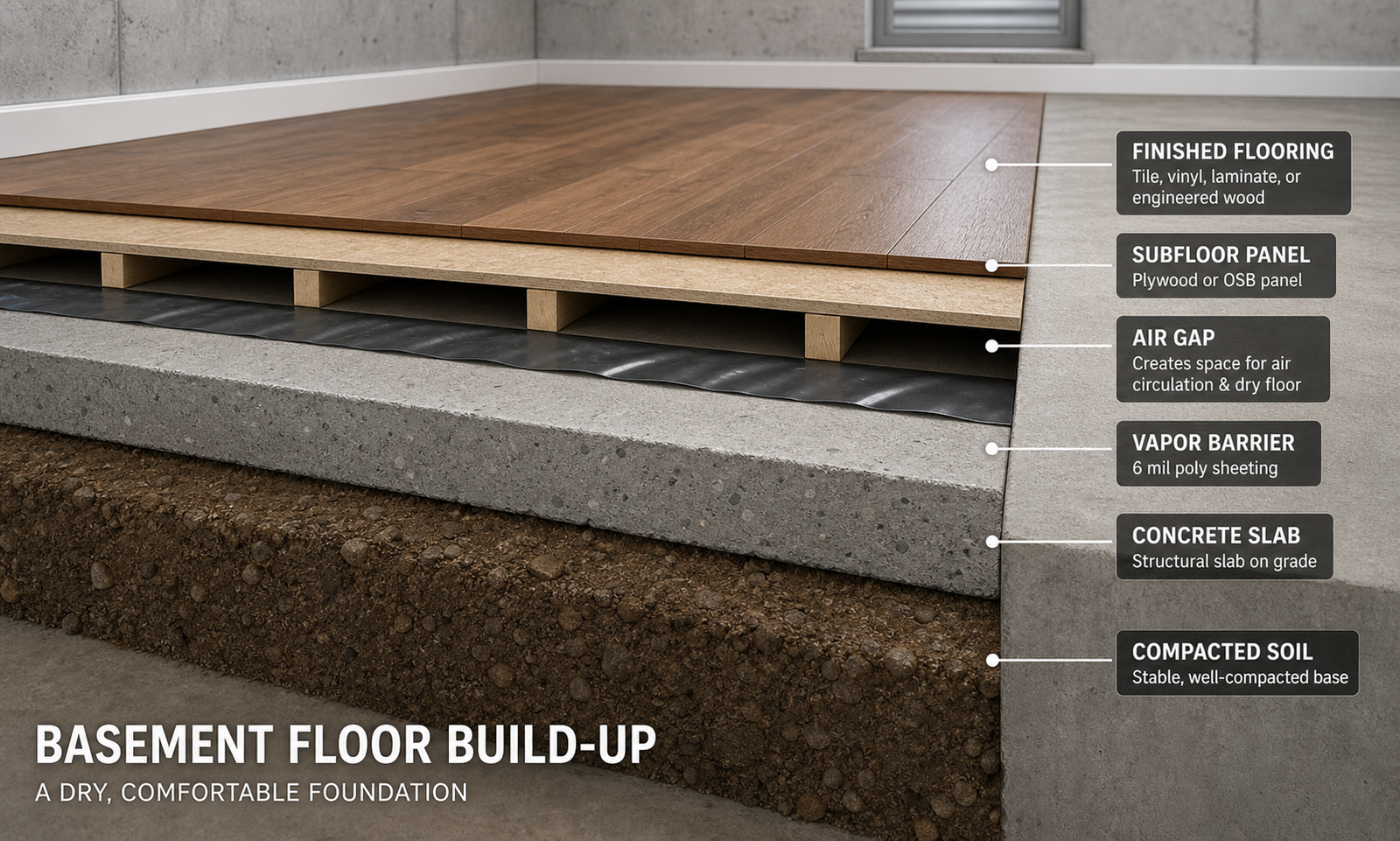
Concrete is porous, and a slab on grade constantly wicks moisture vapor from the soil. Even a dry-looking floor can transmit enough vapor to ruin glued-down or organic flooring. Industry practice is to test the slab before you install anything: the calcium-chloride test (ASTM F1869) measures vapor emission rate, and in-situ relative-humidity probes (ASTM F2170) measure moisture inside the slab. If readings are high, you will need a vapor barrier or a different flooring strategy.
Vapor Barriers and Subfloors
A vapor retarder slows ground moisture from reaching your finish floor. Below new slabs, best practice is a Class A under-slab barrier per ASTM E1745; over an existing slab, many homeowners add a dimpled plastic membrane or an insulated subfloor panel system that creates an air gap and a thermal break. A subfloor also warms the room and lets you install floating floors over an uneven slab.
Temperature, Comfort, and Radon
Basements run cooler, so a thermal break underfoot matters for comfort. It is also wise to test for radon, a soil gas that enters through slabs and is more concentrated below grade; the U.S. EPA's radon guidance explains testing and mitigation, and the EPA's mold and moisture guidance covers humidity control that protects whatever floor you choose.
Basement Flooring Options: Detailed Pros and Cons
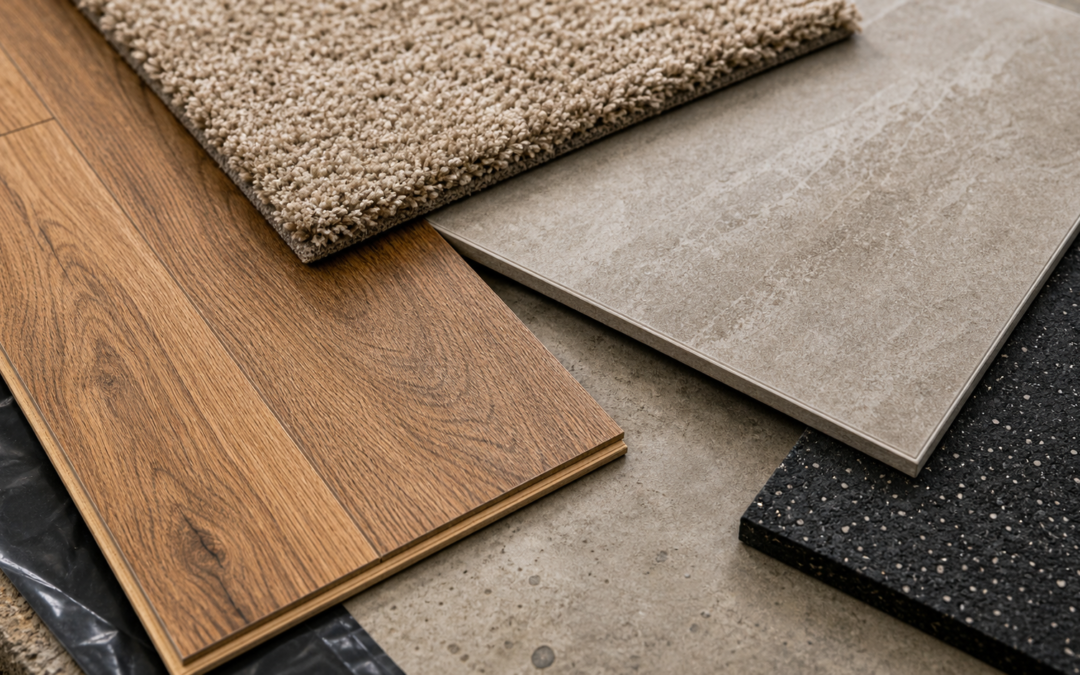
Below are the most common basement flooring materials, each with how it performs below grade, what it costs, and the trade-offs to weigh. Costs are rough installed ranges and vary by region, product grade, and labor.
Luxury Vinyl Plank and Vinyl Tile (LVP / LVT)
Vinyl is the most popular modern basement flooring for good reason. It is fully waterproof, comes in planks and tiles that convincingly mimic wood and stone, and many products click together as a floating floor over a slab. Vinyl tiles also let you create custom patterns and swap a single damaged tile rather than replacing the whole floor.
Pros
- Fully waterproof; ideal below grade
- Realistic wood and stone looks
- Comfortable and quieter than tile
- DIY-friendly floating installation
- Single tiles are easy to replace
Cons
- Can feel cold without a subfloor
- Cheaper products dent and fade
- Vinyl composition can transmit cold
- Sun-exposed areas may discolor
- Not biodegradable; lower-end off-gassing
Typical installed cost: $3–$10 per sq ft. Best for bars, game rooms, gyms, kitchens in studio units, and any space where spills or occasional water are a risk. Shop a wide range at Floor & Decor, The Home Depot, and Lowe's.
Laminate Flooring
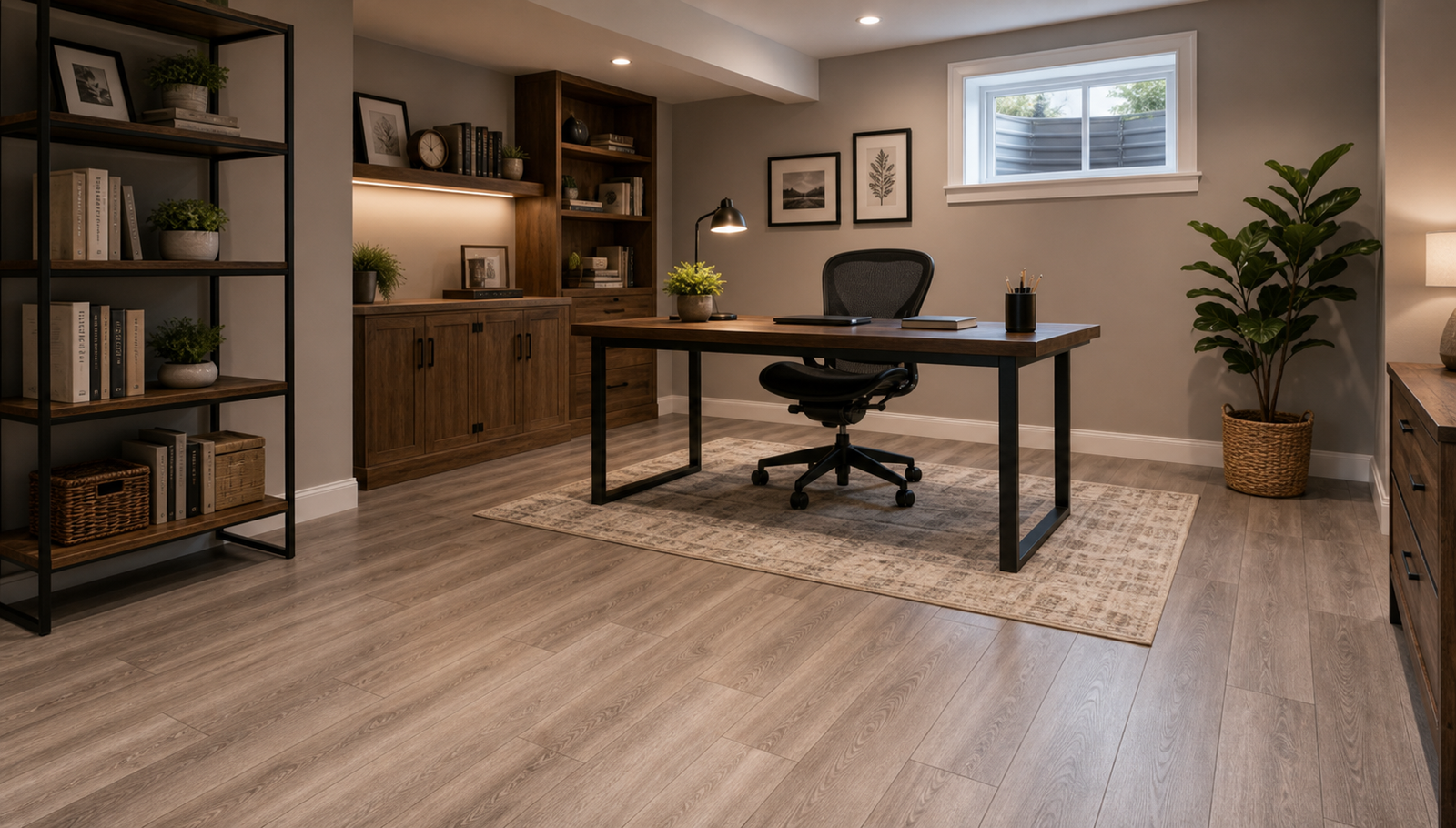
Laminate is built from a fiberboard core topped with a printed photographic layer and a clear wear layer. It looks like wood at a lower price and installs as a floating click floor. The catch below grade is the core: standard laminate uses a wood-based fiberboard that swells if it gets wet, so a basement calls for water-resistant or waterproof laminate specifically rated for it.
Pros
- Convincing wood look for less money
- Hard, scratch-resistant wear layer
- Fast floating click installation
- Water-resistant grades exist for basements
Cons
- Standard core swells with moisture
- Cannot be refinished; replace when worn
- Can sound hollow underfoot
- Edges are vulnerable to standing water
Typical installed cost: $3–$8 per sq ft. Best for bedrooms, offices, and living areas where water risk is low and the slab is known to be dry. Always choose a moisture-rated product and follow the manufacturer's subfloor and acclimation instructions to keep the warranty valid.
Ceramic and Porcelain Tile
Tile is one of the most durable and water-tolerant basement floors. Porcelain in particular is dense, nearly impervious to water, and can be bonded directly to a sound slab. It comes in endless styles, including realistic wood-look planks, and it shrugs off spills, pets, and heavy traffic. The main downsides are hardness and cold underfoot, both of which can be softened with rugs or radiant heat.
Pros
- Extremely durable and waterproof
- Bonds directly to the slab
- Huge range of styles and wood-looks
- Easy to clean; great for wet areas
- Works beautifully over radiant heat
Cons
- Hard and cold without heat or rugs
- Professional install is labor-intensive
- Grout lines need sealing and cleaning
- Cracks if the slab moves or heaves
- Heavier DIY learning curve
Typical installed cost: $7–$20 per sq ft. Best for bathrooms and kitchens in studio units, mudroom-style entries, bars, and high-moisture corners. Pair with an uncoupling membrane on slabs prone to minor movement.
Engineered Hardwood
Engineered wood is a real hardwood veneer over a plywood core, which makes it far more dimensionally stable than solid hardwood in humid conditions. It delivers the warmth and resale appeal of genuine wood and can sometimes be refinished once. It is still wood, though, so it tolerates humidity but not standing water, and it needs a dry, well-prepared slab with a vapor barrier.
Pros
- Authentic hardwood look and warmth
- More stable than solid wood below grade
- Adds perceived home value
- Some products can be refinished once
Cons
- Not waterproof; flooding ruins it
- Needs a dry slab and vapor barrier
- More expensive than vinyl or laminate
- Sensitive to humidity swings
Typical installed cost: $6–$15 per sq ft. Best for bedrooms, studios, and upscale living areas where the slab is verified dry. Solid hardwood is generally not recommended below grade because it expands and contracts too much. See our basement bar cabinet and countertop ideas for matching wood tones if the floor adjoins a bar.
Carpet and Carpet Tiles
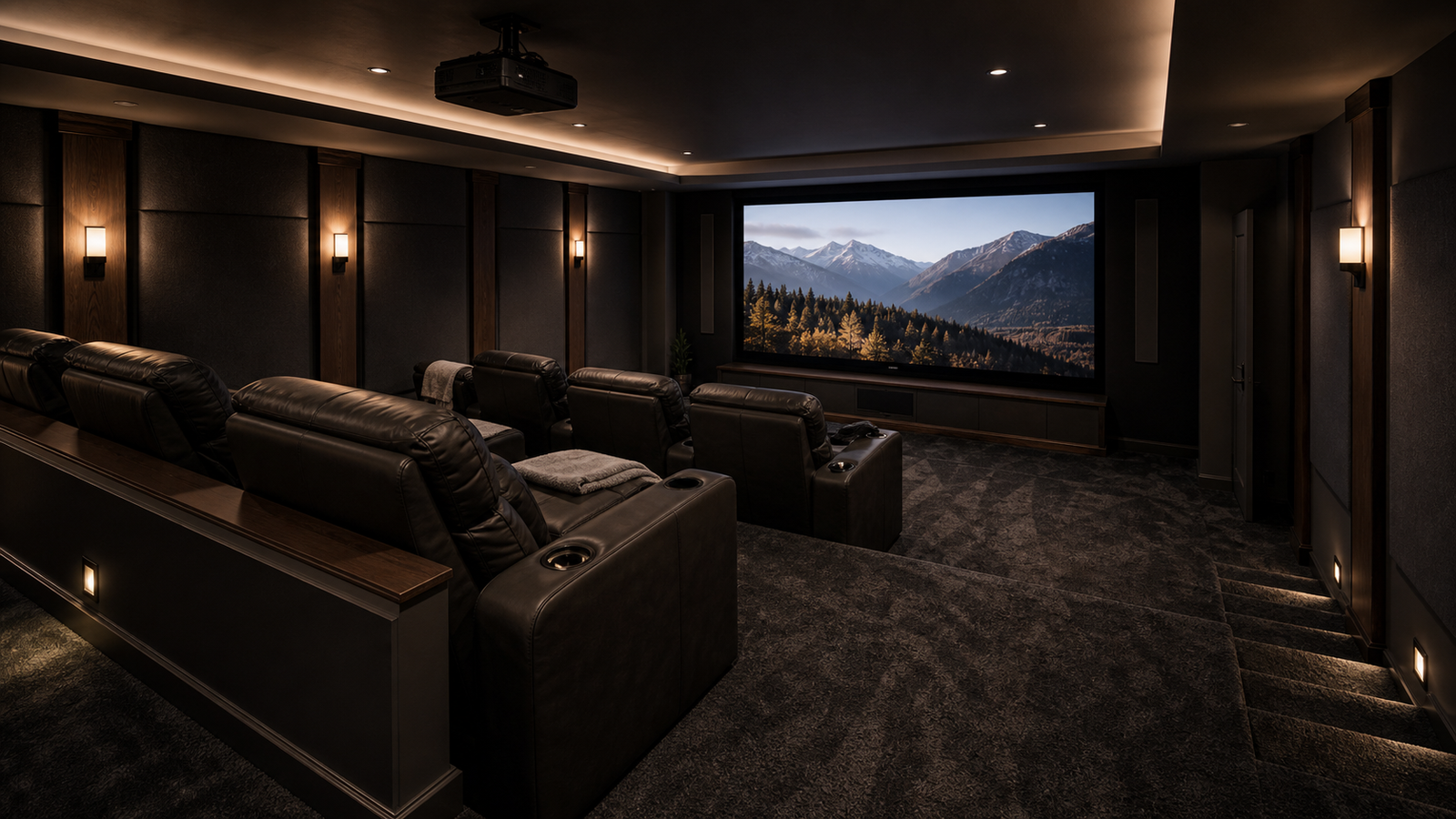
Carpet brings warmth and quiet that hard floors cannot match, insulating the cold slab and softening sound in media and play spaces. The trade-off below grade is moisture: organic fibers and pads can trap dampness and grow mold. The modern fix is synthetic, moisture-resistant fiber (and inorganic backing) plus carpet tiles, which can be lifted and replaced individually if one section gets wet. Darker colors hide stains and absorb warmth.
Pros
- Warm and soft underfoot
- Excellent sound absorption
- Insulates against the cold slab
- Carpet tiles allow spot replacement
- Affordable comfort for large areas
Cons
- Can trap moisture and grow mold
- Holds odors, dust, and allergens
- Hard to fully dry after a flood
- Shows wear in high-traffic paths
- Avoid natural fibers and thick pads below grade
Typical installed cost: $2–$7 per sq ft. Best for bedrooms, home theaters, and kids' playrooms over a dry, vapor-protected slab. Choose synthetic, water-resistant carpet and a moisture-rated pad, and consider tiles in flood-prone basements.
Polished, Sealed, or Stained Concrete
Sometimes the best floor is the slab you already have. Polished, stained, or sealed concrete turns the existing slab into a finished surface that is essentially impervious to water from above and never needs replacing. It suits industrial, modern, and rustic looks and pairs well with rugs to add warmth. It does nothing to stop vapor from below, however, and it is hard and cold.
Pros
- Uses the existing slab; low material cost
- Waterproof from above and very durable
- Modern, industrial, or stained looks
- Zero replacement; easy to clean
Cons
- Hard and cold underfoot
- Does not stop vapor from below
- Cracks telegraph through over time
- Sealer needs periodic reapplication
- Grinding and staining can be messy
Typical installed cost: $3–$12 per sq ft depending on polishing and dyeing. Best for gyms, workshops, modern living spaces, and bars going for an industrial aesthetic.
Epoxy and Resinous Coatings
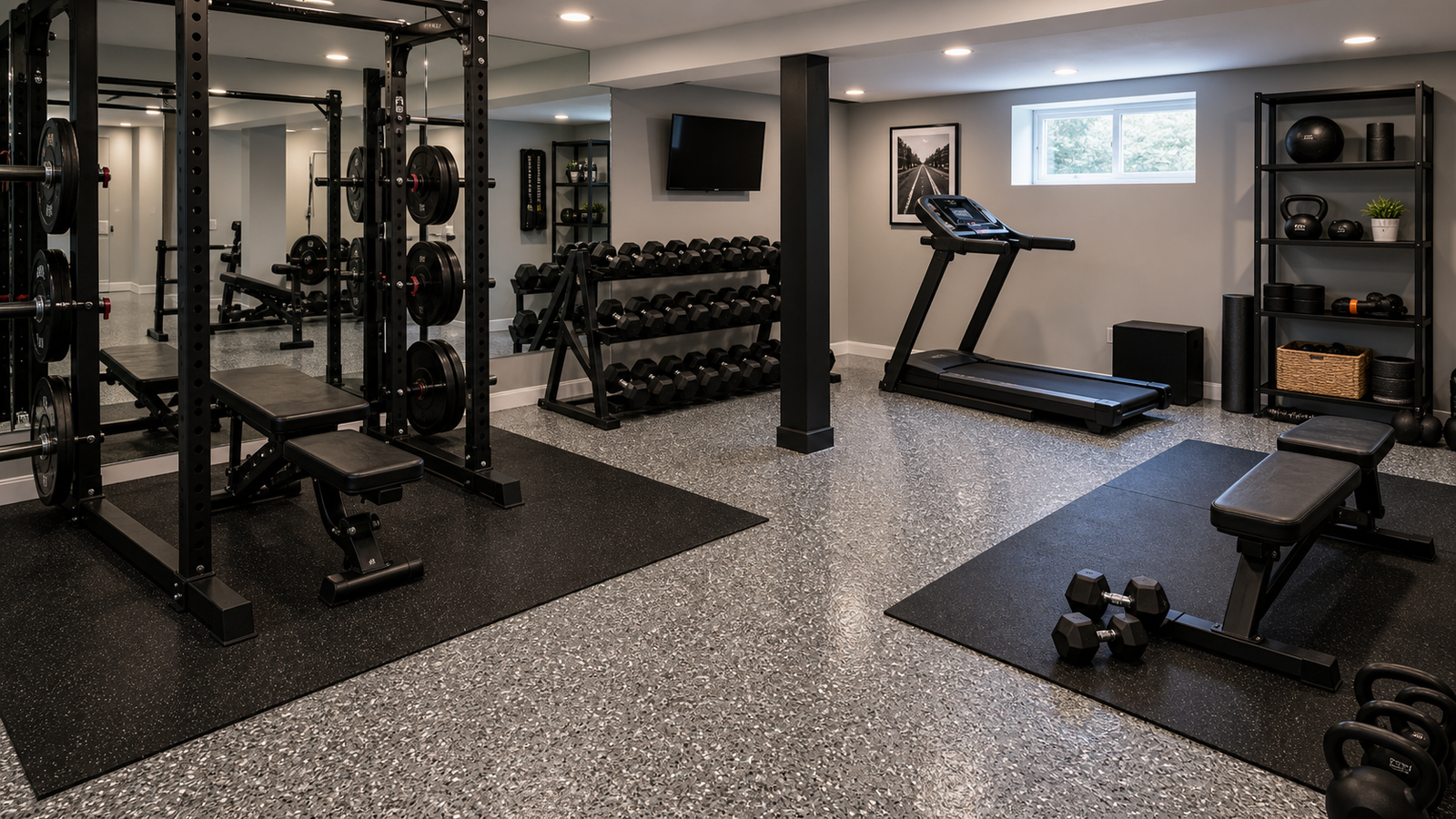
Epoxy is a poured resin coating bonded to the slab, creating a seamless, waterproof, highly durable surface in solid colors, metallics, or flake finishes. It is a favorite for gyms and workshops and increasingly for modern living areas. Because it bonds to the slab, proper moisture testing and surface prep are critical, or the coating can delaminate.
Pros
- Seamless and fully waterproof on top
- Extremely durable and chemical-resistant
- Decorative flake and metallic finishes
- Easy to clean; great for gyms
Cons
- Hard and cold like concrete
- Demands moisture testing and prep
- Can peel if slab moisture is high
- Slippery when wet unless textured
- Professional install for best results
Typical installed cost: $4–$12 per sq ft. Best for home gyms, garages-turned-rooms, workshops, and utility areas of a basement.
Rubber Flooring
Rubber rolls, tiles, and interlocking mats are purpose-built for gyms and play areas. They are water-resistant, cushioned, slip-resistant, and protect both the slab and dropped equipment. They are not a whole-home look, but for the right room they are unbeatable.
Pros
- Cushioned, slip-resistant, and quiet
- Water-resistant and very durable
- Protects the slab from heavy weights
- Interlocking tiles are DIY-friendly
Cons
- Limited, utilitarian aesthetic
- Some products have a rubber odor
- Can be heavy and hard to move
- Not ideal for formal living spaces
Typical installed cost: $3–$8 per sq ft. Best for home gyms, home theaters' equipment zones, kids' playrooms, and laundry areas.
Basement Flooring at a Glance
Use this table for a quick side-by-side before reading the room-by-room recommendations:
| Flooring | Waterproof? | Comfort / Warmth | Approx. Installed Cost | Best Basement Use |
|---|---|---|---|---|
| Luxury vinyl plank | Yes | Medium | $3–$10/sq ft | Bars, game rooms, all-purpose |
| Laminate (water-resistant) | Partial | Medium | $3–$8/sq ft | Bedrooms, offices (dry slab) |
| Ceramic / porcelain tile | Yes | Low (hard, cold) | $7–$20/sq ft | Baths, kitchens, wet zones |
| Engineered hardwood | No | High | $6–$15/sq ft | Bedrooms, upscale living |
| Carpet / carpet tile | No | High | $2–$7/sq ft | Theaters, bedrooms, playrooms |
| Polished concrete | Top only | Low (hard, cold) | $3–$12/sq ft | Gyms, modern living, bars |
| Epoxy coating | Top only | Low (hard, cold) | $4–$12/sq ft | Gyms, workshops, utility |
| Rubber | Yes (resistant) | Medium-high | $3–$8/sq ft | Gyms, playrooms |
Choosing Flooring by Basement Use
The best basement floor depends on what the room will become. Here is how to match material to purpose.
Home Theater
Comfort and acoustics rule here. Carpet over a moisture-rated pad absorbs sound and stays warm for long movie nights, while rubber or carpet tiles work well in equipment zones. If you prefer a hard floor, soften it with large area rugs and acoustic panels.
Game Room or Rec Room
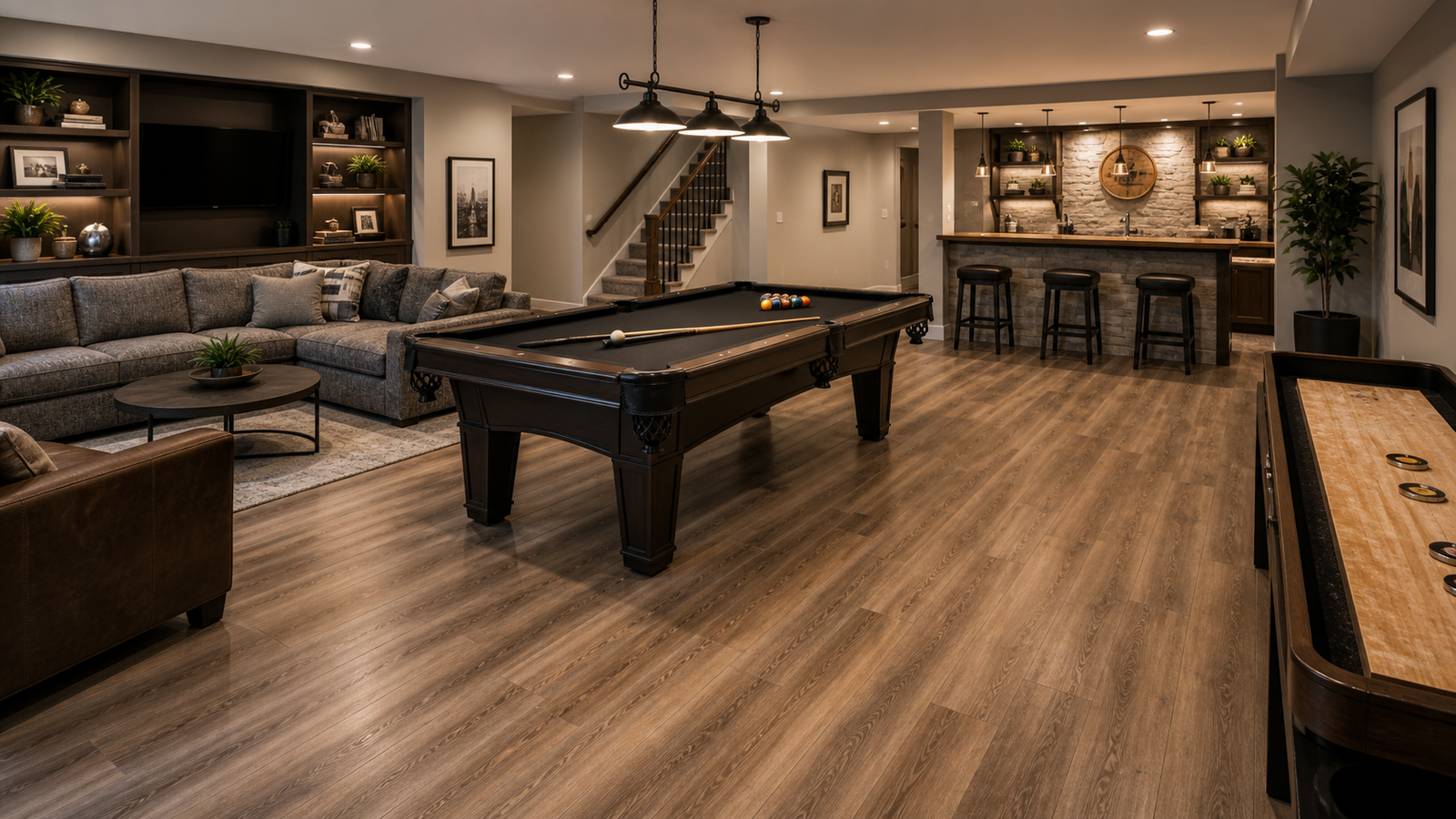
Durability and spill resistance matter most. Luxury vinyl plank is the all-around winner; polished concrete or porcelain tile suit a more industrial look and handle dropped cues, darts, and drinks with ease.
Guest Bedroom or Legal Bedroom
Warmth and a residential feel are the priority. Carpet or engineered wood over a dry, vapor-protected slab both work well. If you want the room to count as a legal bedroom, flooring is only part of the job: under IRC Section R310, a basement sleeping room needs an emergency escape and rescue opening with a minimum net clear opening of 5.7 square feet, at least 24 inches high and 20 inches wide, with a sill no more than 44 inches above the floor. Confirm egress, ceiling height, and permits with your local building department.
Basement Studio or Accessory Dwelling Unit
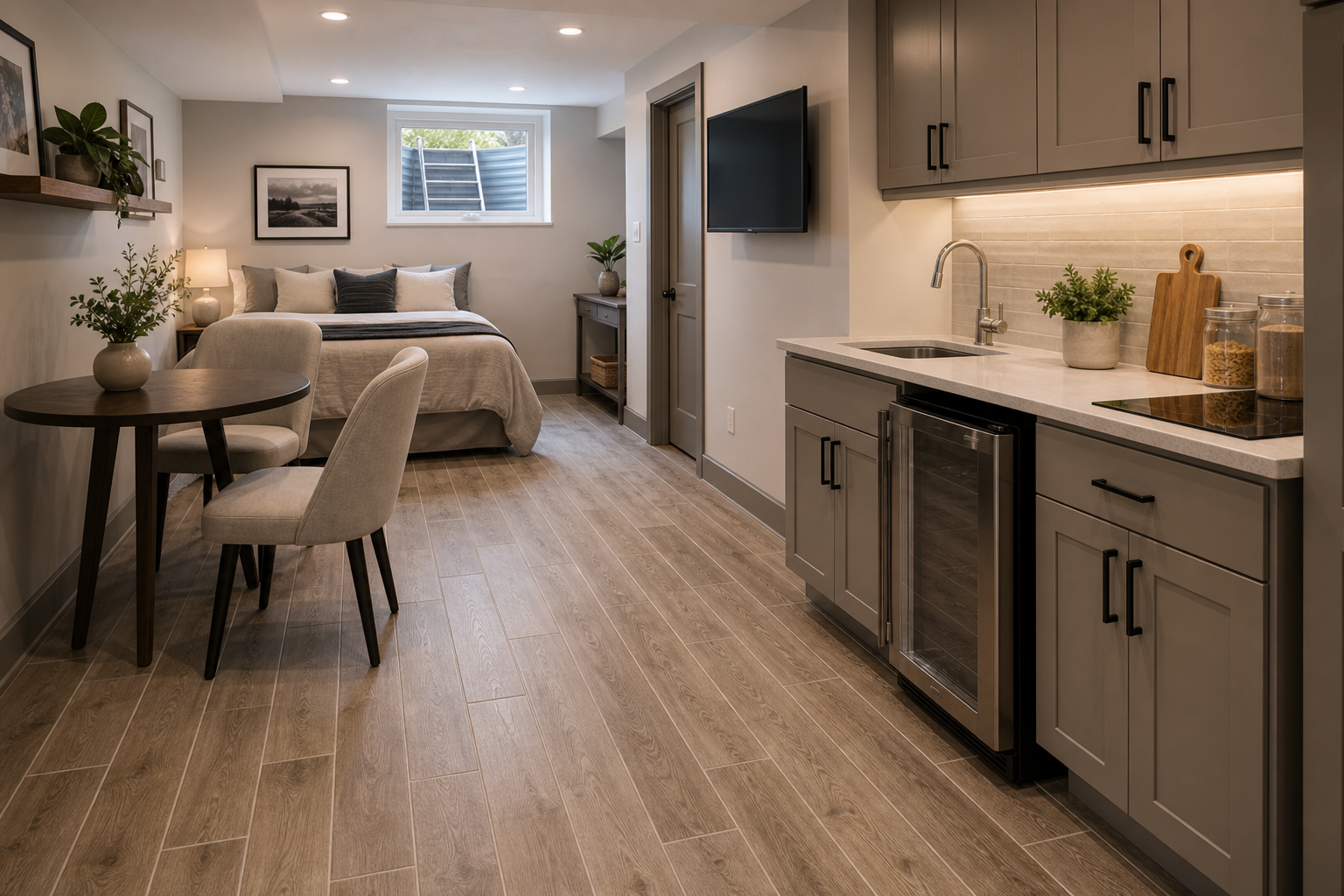
A studio or accessory dwelling unit (ADU) combines a sleeping area, a kitchenette, and a bathroom, so you will likely mix materials: waterproof vinyl or tile in the kitchen and bath, and carpet or engineered wood in the living and sleeping zones. Because an ADU is a separate dwelling, expect stricter code review, including egress, ventilation, and separate permits.
Home Gym
Rubber flooring or epoxy over the slab is the standard. Rubber cushions joints and protects the slab from dropped weights; epoxy gives an easy-clean, durable surface for cardio and lifting areas.
Basement Bar
A bar sees spills, ice, and foot traffic, so prioritize waterproof, easy-clean surfaces: luxury vinyl plank, porcelain tile, or sealed concrete. Coordinate the floor with your cabinets and counters using our basement bar cabinet and countertop ideas, and see the full basement bar ideas guide for layout and theme inspiration.
Preparation and Installation Tips
Whatever material you choose, the prep underneath determines how long it lasts. A few rules apply to almost every basement floor:
- Test the slab first. Run moisture tests and fix any leaks, cracks, or drainage problems before installing.
- Use a vapor barrier. Most basements benefit from a vapor retarder or a dimpled membrane between slab and floor.
- Consider a subfloor. Insulated subfloor panels add warmth, level minor unevenness, and create an air gap.
- Acclimate the flooring. Let planks and boards adjust to the room's humidity before installing, per the manufacturer.
- Mind transitions and expansion gaps. Floating floors need room to move; leave the gaps the maker specifies.
- Pull permits when required. Bedrooms, ADUs, and any structural, electrical, or plumbing work usually need permits.
For the broader sequence of waterproofing, framing, and finishing a basement before flooring goes down, see our basement finishing ideas guide.
Bringing It All Together
There is no single best flooring for every basement — only the best floor for your slab, your moisture conditions, your budget, and the way you will use the room. Start by understanding what is happening beneath the slab, protect against moisture, then choose a material whose strengths line up with the space. Get those steps right and your basement can be as comfortable, durable, and inviting as any room upstairs.
Frequently Asked Questions
What is the best waterproof flooring for a basement?
Luxury vinyl plank is the most popular fully waterproof option because it is comfortable, affordable, and easy to install. Porcelain tile and sealed concrete are also excellent where you want maximum water resistance and durability.
Can I put hardwood flooring in a basement?
Engineered hardwood can work over a dry, vapor-protected slab because its plywood core is more stable than solid wood. Solid hardwood is not recommended below grade because it expands and contracts too much with humidity.
Is carpet a bad idea in a basement?
Not necessarily, but choose carefully. Use synthetic, moisture-resistant carpet with a moisture-rated pad over a dry, vapor-protected slab, and consider carpet tiles so you can replace individual sections if water gets in. Avoid natural fibers and thick organic pads below grade.
Do I need a subfloor or vapor barrier in my basement?
In most basements, yes. A vapor barrier slows ground moisture, and an insulated subfloor adds warmth and levels minor unevenness. Test the slab for moisture first, then follow your flooring manufacturer's requirements to keep the warranty valid.
What flooring is warmest for a cold basement?
Carpet is the warmest and softest underfoot. For hard floors, an insulated subfloor underneath, area rugs, or radiant heat under tile all add comfort in a cool basement.
How do I know if my basement slab is too wet for flooring?
Have the slab tested with a calcium-chloride test (ASTM F1869) and in-situ relative-humidity probes (ASTM F2170). If readings exceed your flooring manufacturer's limits, install a vapor barrier or choose a more moisture-tolerant material before proceeding.
Keep planning your basement with our related guides:
basement flooring ideas, basement finishing ideas, and basement bar ideas.