A complete planning, design, and styling guide for turning unused square footage into your favorite room.
Table of Contents
- Start With How You Will Actually Use the Bar
- Wet Bar vs. Dry Bar: Which Is Right for Your Basement?
- Basement Bar Essentials to Plan Before You Buy
- Building Codes and Safety You Cannot Skip
- Moisture, Ventilation, and the Right Materials
- Choose a Theme and Stick With It
- Modern or Contemporary
- Zen (Japanese-Inspired)
- Classical or Ornate
- Countryside or Rustic
- Rustic Pub
- Sports Arena and Man Cave
- Blues and Grays
- The Club (Speakeasy Lounge)
- Pick the Right Bar Countertop
- Lighting Ideas That Set the Mood
- Small and Budget-Friendly Basement Bar Ideas
- Finishing Touches and Decor
- Build It in Phases (Realistic Budgeting)
- Frequently Asked Questions
Summary: Key Takeaways
- The best basement bar ideas start with how you will actually use the space.
- Decide early between a wet bar and a dry bar because plumbing changes your budget and layout.
- Respect building codes for ceiling height, egress, and electrical safety.
- Plan for moisture with the right materials, ventilation, and a dehumidifier.
- Choose one clear theme so furniture, lighting, and decor feel unified.
- Build in phases: a simple dry bar now, with upgrades added later.
A basement bar can turn forgotten square footage into one of the most comfortable, social rooms in the house. Whether you want a quiet spot to mix an evening drink, a game-day sports bar and man cave, or a polished entertaining area, the best basement bar ideas all begin the same way: with a clear plan for the space you already have.
You do not need a huge budget or a full luxury remodel to build a basement bar that feels inviting. A smart layout, durable materials, good lighting, and a few personal details can make even a small corner feel intentional. The sections below walk you through planning, codes, themes, materials, and finishing touches so you can design with confidence.
Start With How You Will Actually Use the Bar
The right design depends on how the room will be used most often. If you host friends for big games, you probably want a television wall, comfortable seating, easy access to snacks, and a counter with room for several people. If the bar is mainly for quiet evenings, a compact wet bar with shelves, glassware, and soft lighting may be all you need.
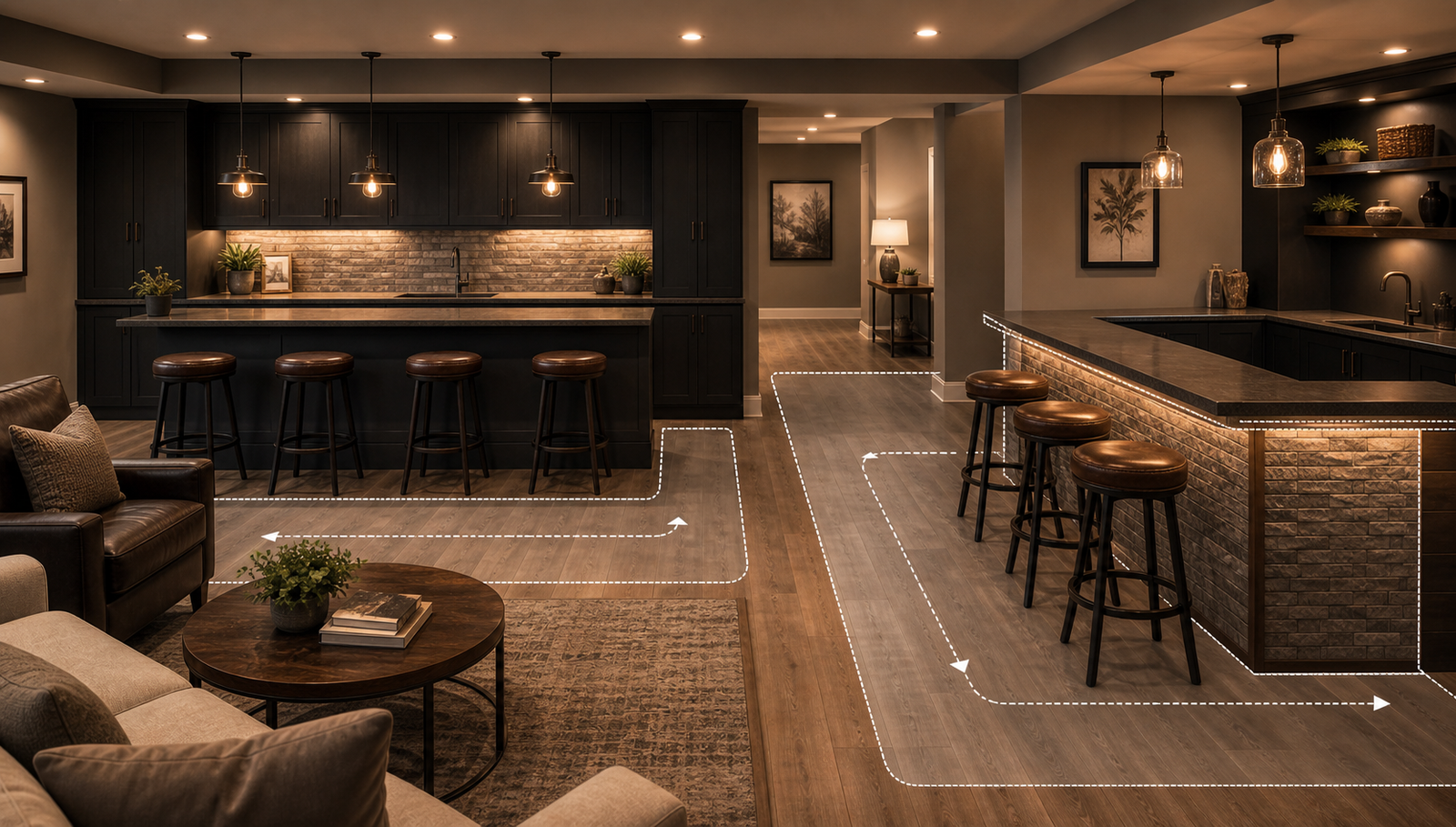
Plan for Traffic Flow and Layout
Leave enough room for people to move behind stools, open cabinet doors, and walk between the bar and the seating area. As a rule of thumb, allow roughly 36 to 42 inches of clearance behind a bar so a bartender can work while guests are seated.
Common basement bar layouts include:
- Straight wall bar: the simplest option and usually the best choice for a narrow basement.
- L-shaped bar: adds counter space and a natural corner for a sink or appliances.
- U-shaped bar: maximizes storage and seating when you have the room for it.
- Island or peninsula: creates a gathering spot in a larger, open basement.
Wet Bar vs. Dry Bar: Which Is Right for Your Basement?
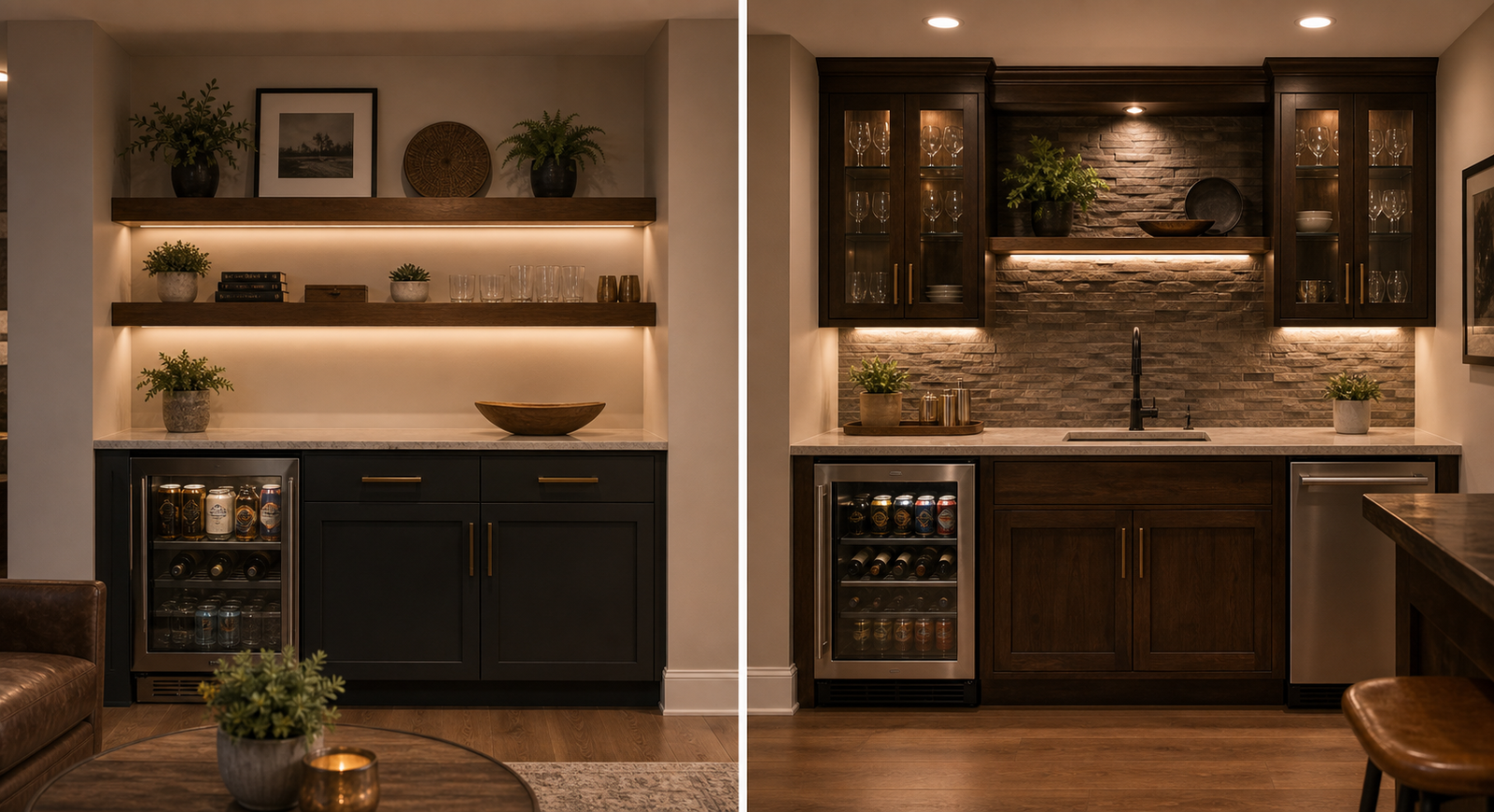
One of the first decisions is whether you want a wet bar or a dry bar. A wet bar includes a sink, which makes mixing drinks and cleaning up far easier, but it also requires plumbing, drainage, and the added cost of running supply and waste lines into a finished space. A dry bar skips the sink and focuses on storage, a counter, and a small refrigerator, which keeps the project simpler and cheaper.
If you entertain often or plan to prep food and drinks at the bar, the convenience of a sink usually pays off. For a deeper comparison and plumbing tips, see our guide to wet bar ideas and planning.
Basement Bar Essentials to Plan Before You Buy
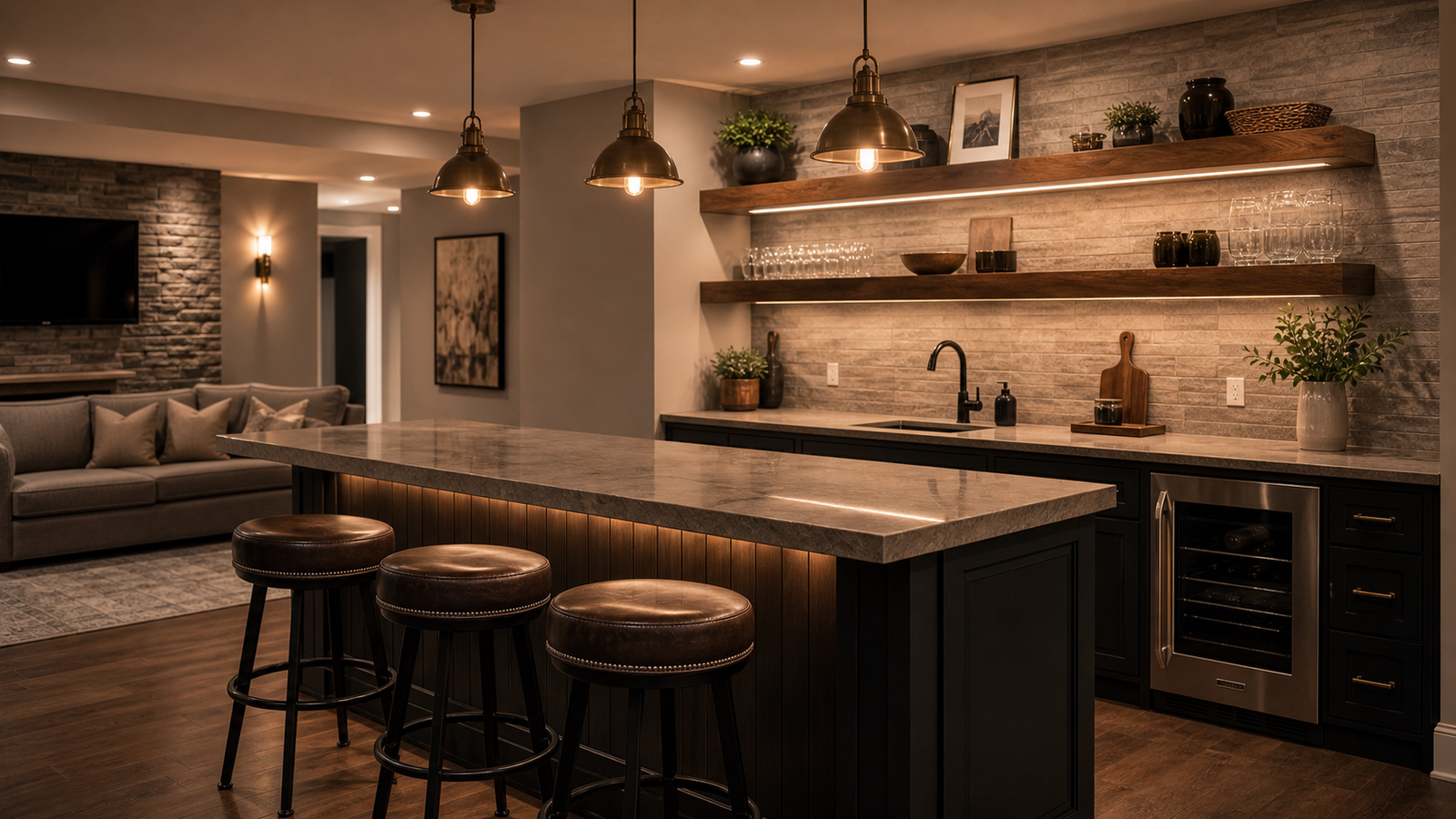
Before you start buying cabinets, stools, and appliances, list the features you want most. Mapping these out first prevents expensive surprises and helps your electrician and contractor quote accurately.
- Base cabinets and open shelving for bottles and glassware
- A durable countertop sized for your seating
- A beverage or under-counter refrigerator
- Dedicated outlets for appliances, plus a circuit that can handle them
- Layered lighting over and under the bar
- A sink, faucet, and drainage if you choose a wet bar
- Comfortable bar stools at the correct height for your counter
Stool height matters more than people expect. Standard counters (about 36 inches) pair with counter-height stools, while taller bar counters (about 42 inches) need bar-height stools. Our bar stool buying guide breaks down the measurements, and home bar storage ideas covers smart ways to organize bottles and barware.
Building Codes and Safety You Cannot Skip
A basement bar is part construction project, so a few code requirements directly shape your design. Codes vary by location, and local rules always take precedence, so confirm everything with your local building department before you start.
Ceiling Height
The International Residential Code (IRC), published by the International Code Council, sets a minimum finished ceiling height of 7 feet for habitable basement spaces and hallways (Section R305), with beams and ducts allowed to project down to 6 feet 4 inches. If your basement is tight on headroom, plan your soffits and lighting around these limits.
Emergency Egress
Finished basements typically require an emergency escape and rescue opening under IRC Section R310, especially if the space includes a sleeping room. Egress windows generally must meet minimum size and sill-height requirements, so factor an egress window into the budget if your basement does not already have one. The International Code Council publishes the current standards.
Electrical and GFCI Protection
Under the National Electrical Code (NFPA 70), receptacles in basements require ground-fault circuit-interrupter (GFCI) protection, and recent code cycles extended that requirement to all basement receptacles, finished or unfinished. A bar adds appliances and water, so have a licensed electrician plan dedicated circuits and GFCI outlets.
For the full build sequence, including framing, insulation, and finishing, see our basement finishing ideas guide.
Moisture, Ventilation, and the Right Materials
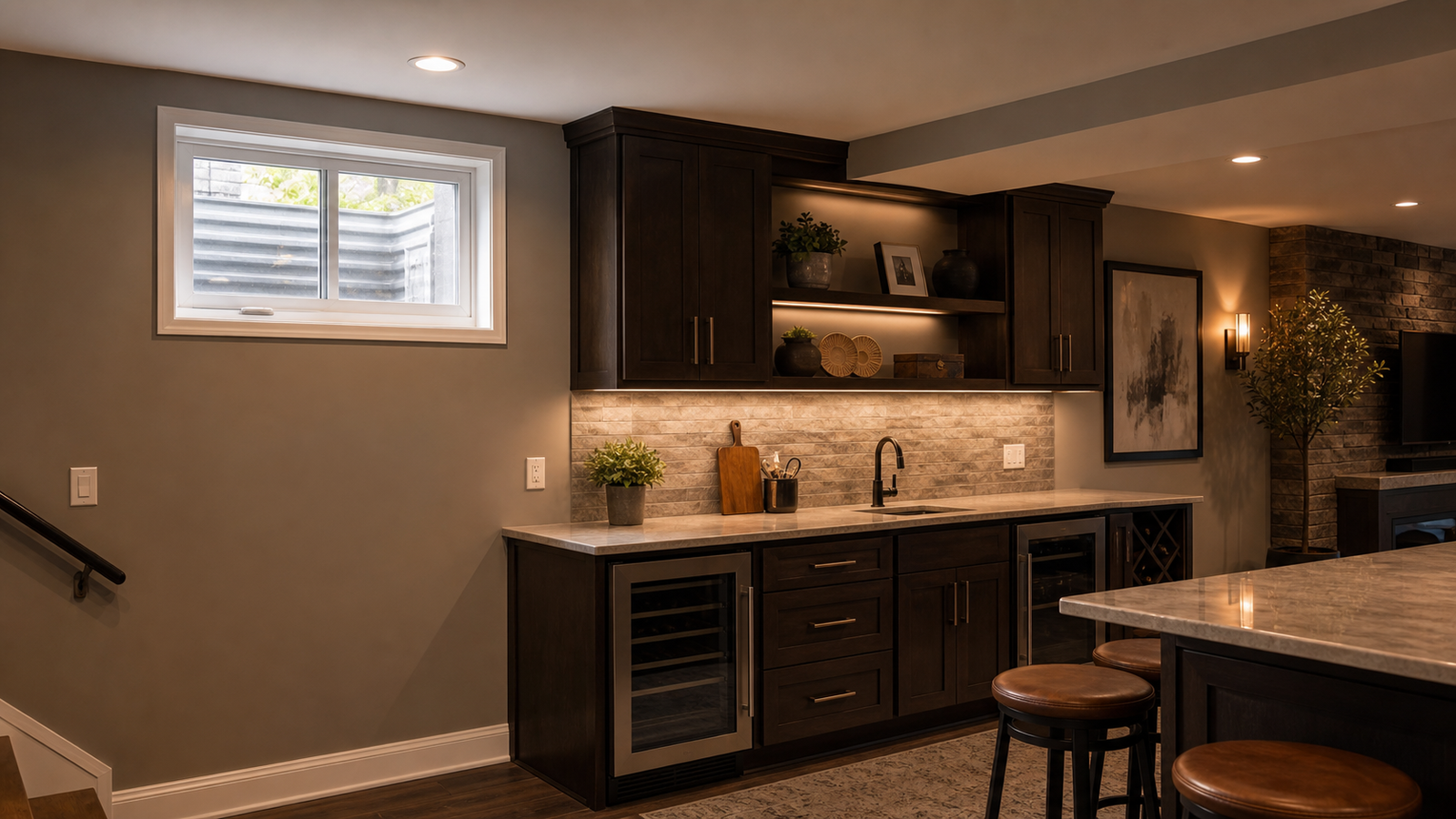
Basements are prone to dampness, and a bar adds water, condensation, and spills. Controlling moisture protects your investment and your air quality. The U.S. EPA's mold and moisture guidance recommends keeping indoor humidity low and fixing leaks quickly, and the EPA also publishes radon testing information that is worth reviewing before you finish any below-grade space.
Practical moisture strategies for a basement bar include:
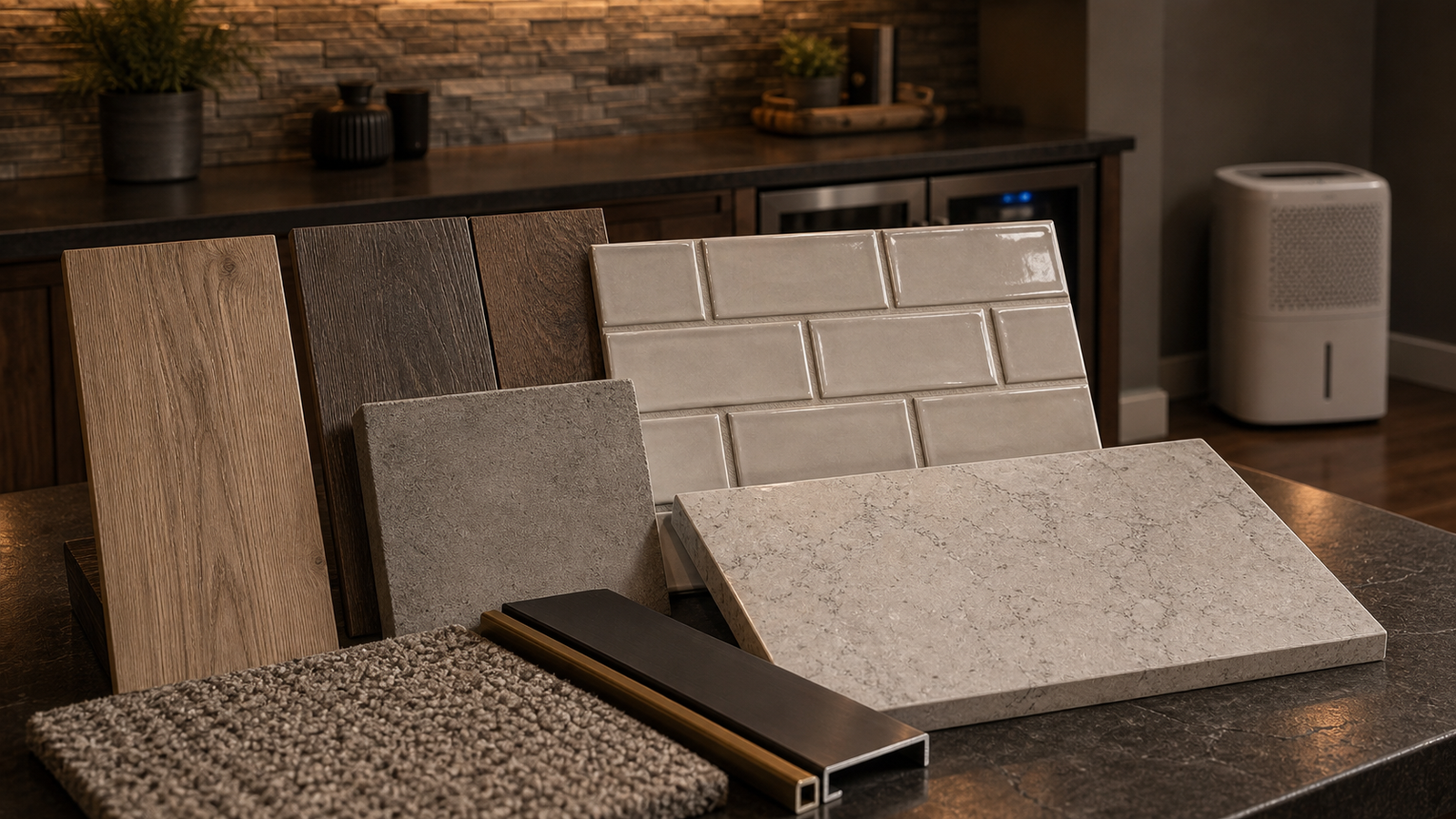
- Running a dehumidifier and ensuring good ventilation
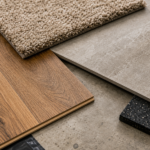
- Choosing moisture-resistant finishes such as tile, sealed concrete, luxury vinyl plank, stone, or metal
- Sealing concrete floors and using properly finished, water-tolerant wood
- Adding a floor drain or waterproof flooring near a wet bar sink
Choose a Theme and Stick With It
In real estate the rule is location, location, location. For basement bars, it is themes, themes, themes. A clear theme brings unity to your furniture, lighting, accessories, and décor, and it keeps shopping decisions simple. Interior-design organizations like the American Society of Interior Designers (ASID) emphasize that a consistent concept is what makes a room feel finished rather than collected. Pick one direction below, or blend two that share a common trait, and commit to it.
Modern or Contemporary
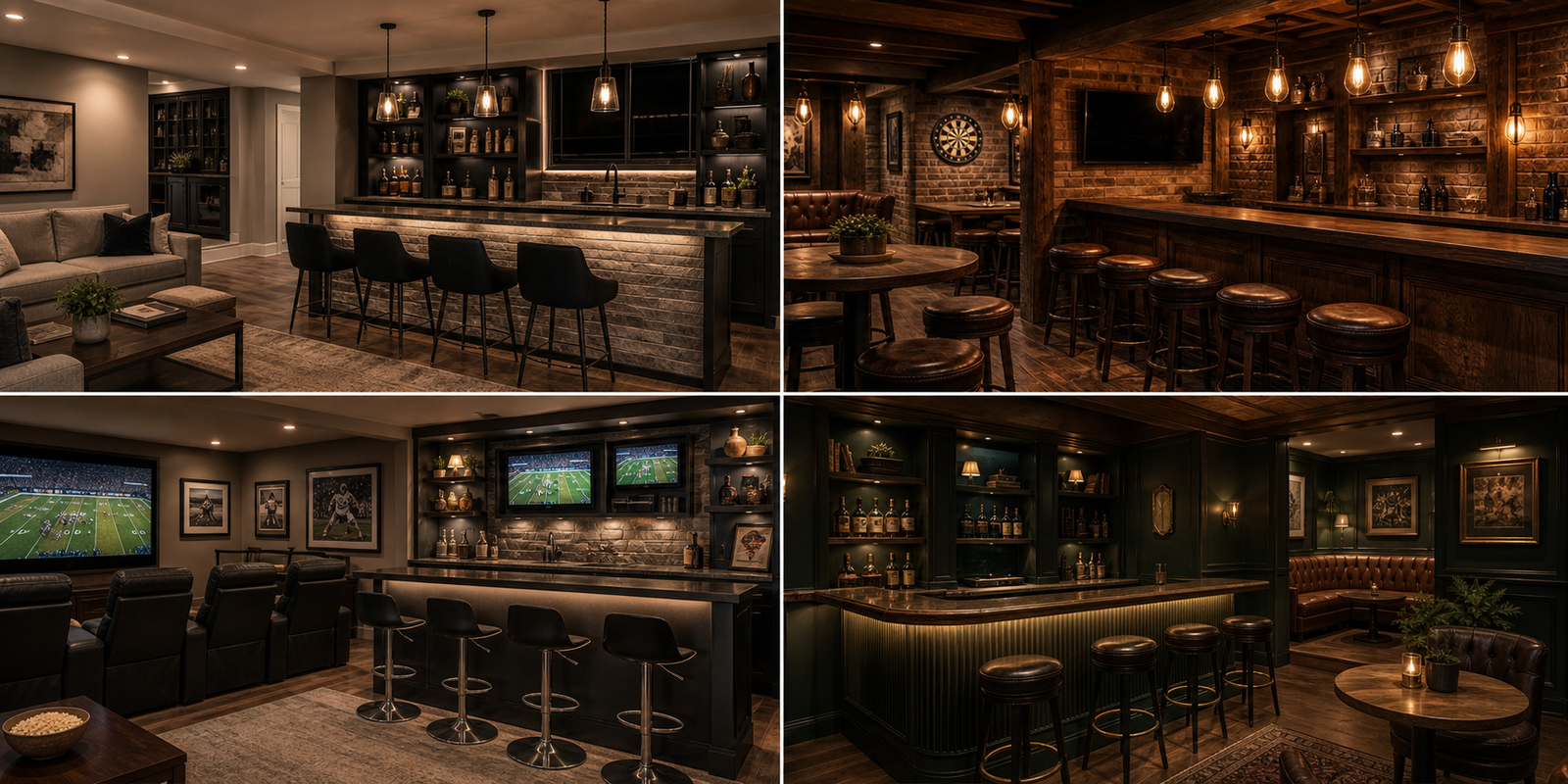
Clean lines, simple shelves, dark counters, and metal accents define this look. Think steel and stone, with light walls and a single bold splash of color, such as red or orange, against a black-and-gray palette. Clutter is minimized, and smooth, seamless materials are preferred.
Zen (Japanese-Inspired)
A close cousin of modern design, the Zen theme leans on straight lines, natural materials, and a limited, earthy palette of browns and creams. Wood accents in dark walnut or mahogany tones pair with a small splash of green to suggest nature. Curves appear only as occasional accents in lighting or wall décor.
Classical or Ornate
Inspired by Greek and Roman detailing, this theme features carvings, moldings, and rich, dark woods. Picture a 1930s-style bar with dark ceramics, low lighting, a chandelier, and crown molding. It rewards craftsmanship and a more formal palette.
Countryside or Rustic
Drawn from country homes and log cabins, the countryside theme uses plenty of wood in oak and bleached-cherry tones, wooden furniture, and timber wall accents. It borrows from Colonial and Victorian styles and feels warm and lived-in.
Rustic Pub
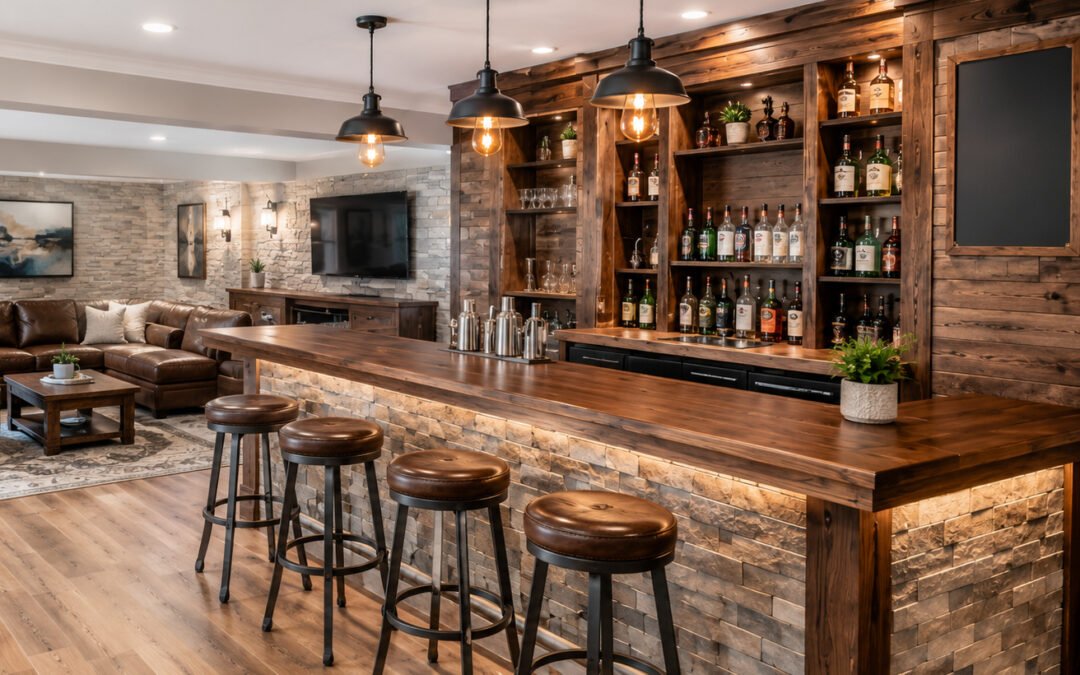
Wooden ceiling beams, stacked-stone veneer walls, and rustic wood stools recreate the feel of an old-fashioned pub. A long walnut or maple bar finished in several coats of high-gloss varnish becomes the centerpiece.
Sports Arena and Man Cave
Built for game nights, this theme centers on a wall-length screen, recliners or comfortable seating pulled in close, and a long bar behind them. A scratch-resistant laminate top over a dark-wood base holds up to heavy use, and recessed lighting lets you switch between game mode and movie mode. Team colors and memorabilia personalize it. Our man cave and sports bar ideas post has more inspiration.
Blues and Grays
Blue is relaxing and uplifting at the same time, and mixing blue hues with grays and chrome fixtures creates an elegant, open feel. White-pine floors, scattered small bars, chrome pendant lights, and a chrome fireplace against a gray backdrop keep the room bright and friendly.
The Club (Speakeasy Lounge)
For a rich, club-like atmosphere where scotch and conversation flow, create an intimate cove with curved walls and a drop ceiling with recessed lighting. Cherry veneer around a curved bar, a thick two-tier glass top, soft gold walls, and wainscoting set a refined, unwind-after-work mood.
Pick the Right Bar Countertop
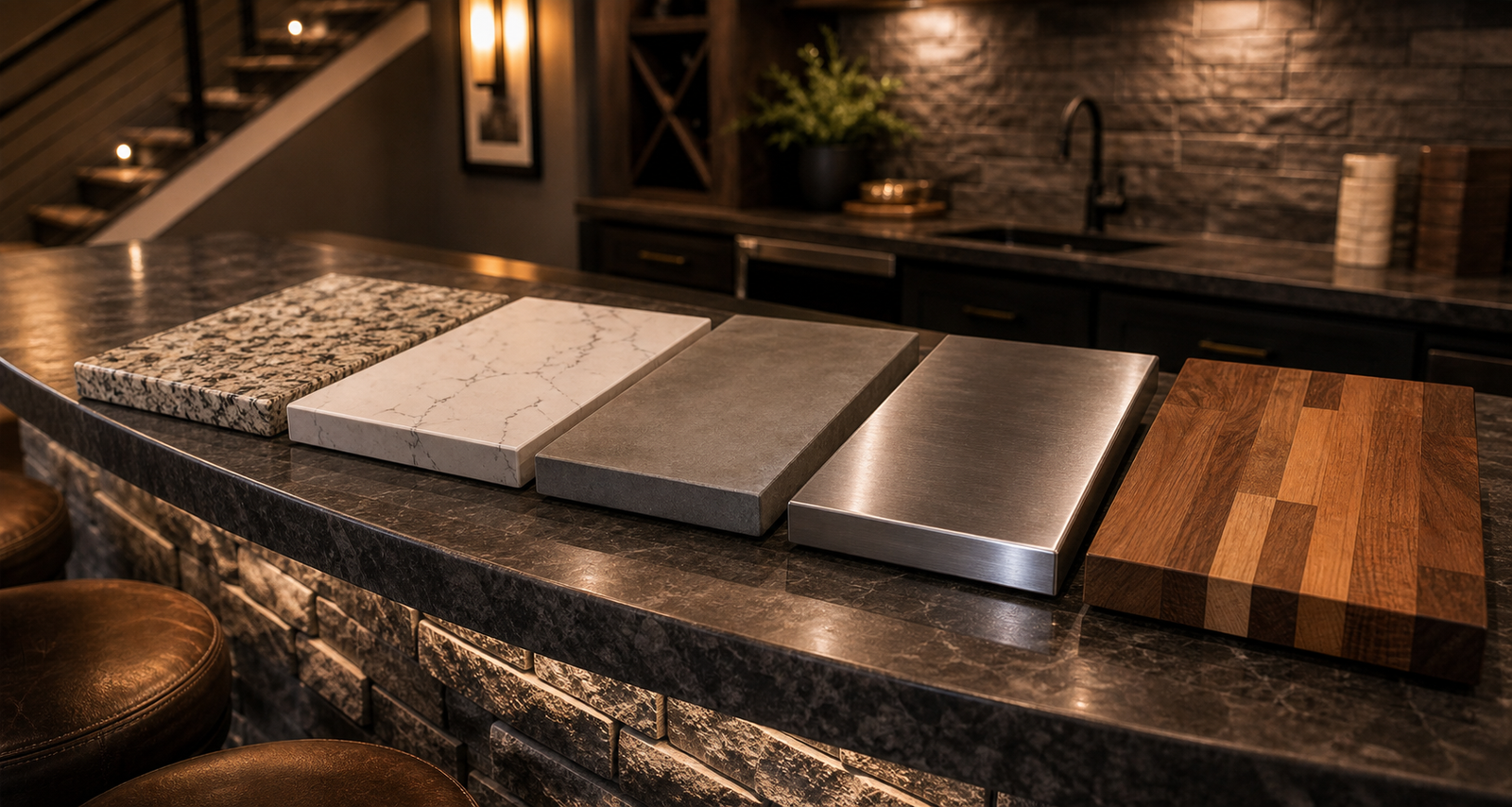
The countertop is one of the first things the eye is drawn to, so it deserves attention. Match the material to your theme, your budget, and how hard you will use the bar:
- Granite: the classic choice, sophisticated and long-lasting, and a striking accent in almost any style.
- Quartz: extremely durable and dense, with a wide range of colors and patterns and very little maintenance.
- Concrete: a custom, industrial-friendly option that can be tinted, sealed, and shaped to fit.
- Stainless steel: clean and modern, or a distinctive industrial accent in a rustic room.
- Butcher block: warm and budget-friendly for countryside and rustic themes, as long as it is sealed against moisture.
Compare durability, cost, and maintenance in our bar countertop materials guide.
Lighting Ideas That Set the Mood
Good lighting does more for a basement bar than almost any other upgrade because basements rarely get natural light. Layer three types so you can shift from bright to intimate with the flip of a switch:
- Ambient: recessed ceiling lights on a dimmer for overall brightness.
- Task: pendant lights over the bar so guests can see what they are pouring.
- Accent: under-shelf LED strips and backlit bottle displays for atmosphere.
For fixture placement, color temperature, and wiring tips, see our basement bar lighting ideas.

Small and Budget-Friendly Basement Bar Ideas
A great basement bar is not always the biggest or most expensive one. In a tight or low-budget space, work smarter:
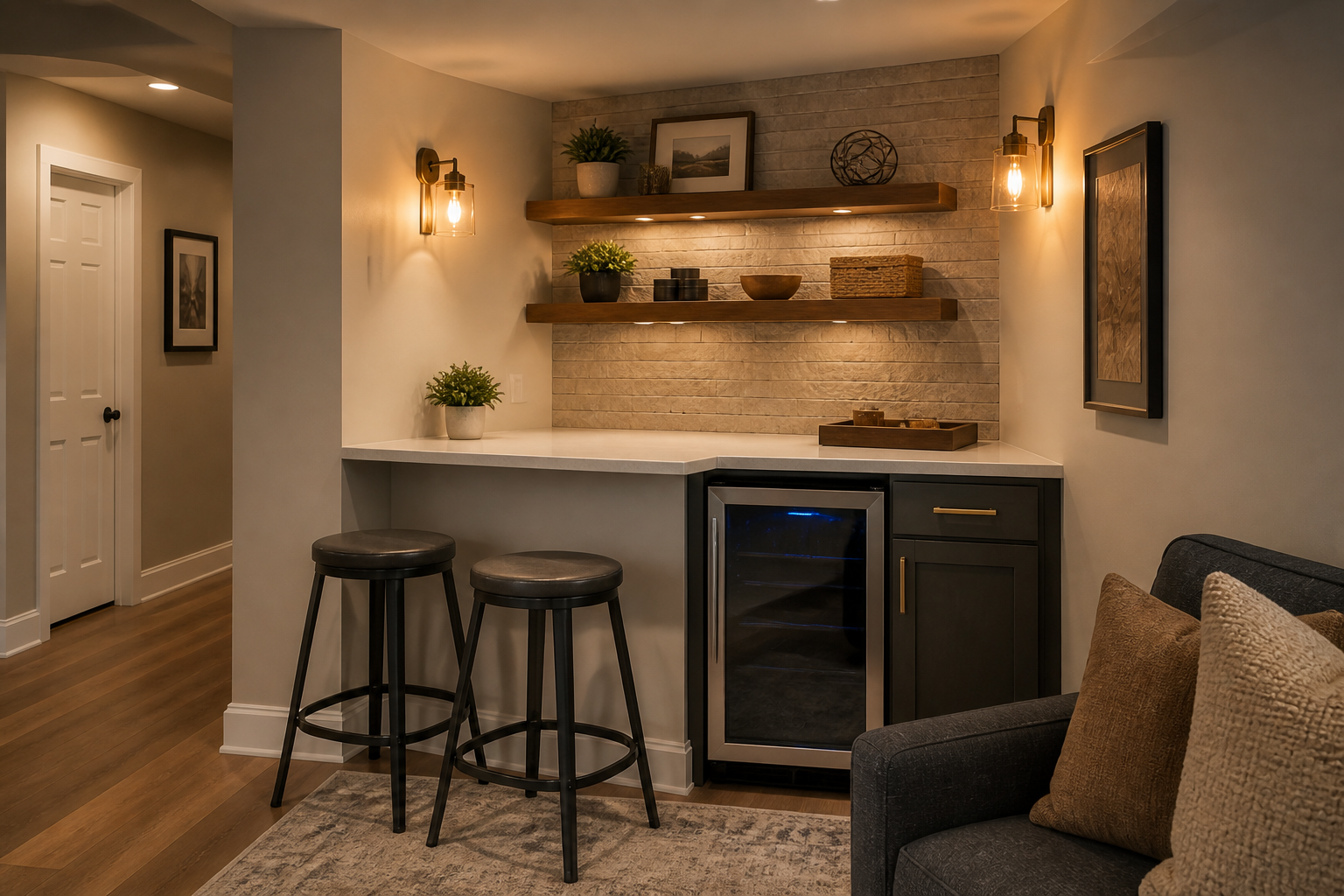
- Tuck a compact corner bar into an underused nook.
- Use floating shelves instead of full upper cabinets to open up the wall.
- Repurpose a sturdy console, dresser, or old cabinet as a bar base.
- Add a rolling bar cart for flexibility you can move during parties.
- Choose a mini-fridge and a single statement light to keep costs down.
More layouts and clever space-savers are in our small basement bar ideas roundup.
Finishing Touches and Decor
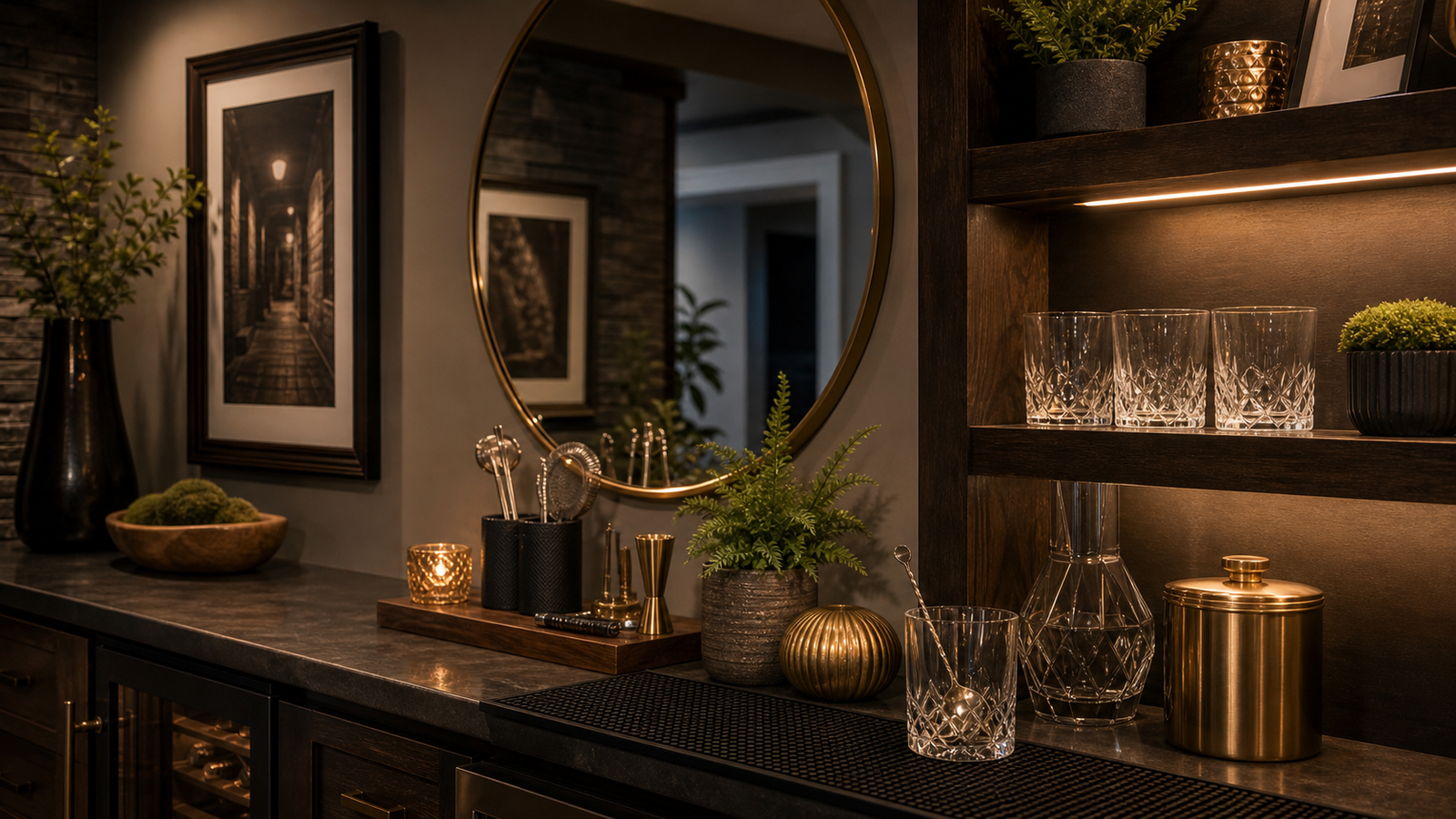
Small details make the room feel complete. Beer signs, mirrors, framed prints, under-shelf lighting, bar mats, and a set of distinctive stools all add character. The key is restraint: choose a few strong accents rather than filling every surface. A cleaner design feels more comfortable and leaves the bar easier to use.
Tie your accents back to your chosen theme. A rustic pub leans on vintage signage and stone; a modern bar relies on a single sculptural pendant and glossy surfaces; a club lounge uses framed art, soft textiles, and warm metals.
Build It in Phases (Realistic Budgeting)
A basement bar is easier on your wallet and your weekends when you break it into phases. Start with a dry bar, cabinets, and seating so you can enjoy the room right away, then add a sink, upgraded lighting, or built-in refrigeration later. Phasing also gives you time to live with the layout and adjust before you commit to plumbing or custom millwork.
The best basement bar is the one that fits your space, your budget, and the way you like to relax at home. With a thoughtful plan and a few practical design choices, your basement can become a welcoming place for drinks, conversation, and everyday entertaining.
Frequently Asked Questions
How much does a basement bar cost?
Costs vary widely. A simple dry bar built from stock cabinets and a modest countertop can be a few hundred to a couple thousand dollars, while a full custom wet bar with plumbing, premium counters, and built-in appliances can run several thousand or more. Phasing the project helps spread the cost.
Do I need a permit for a basement bar?
Often yes, especially if the project involves new plumbing, electrical circuits, or finishing previously unfinished space. Permit rules are set locally, so check with your building department before starting.
Should I build a wet bar or a dry bar in a small basement?
In a small basement, a dry bar usually makes more sense because it avoids the cost and space demands of plumbing. If you entertain frequently, a compact wet bar can still be worthwhile, but confirm you have room for the sink and drainage.
What is the best flooring for a basement bar?
Moisture-resistant options perform best below grade: luxury vinyl plank, tile, and sealed concrete all handle dampness and spills well and are easy to clean.
How big should a basement bar be?
Size it to your space and seating. Allow roughly 36 to 42 inches of clearance behind the bar for movement, plan about 24 inches of counter width per seated guest, and choose a layout (straight, L-shaped, U-shaped, or island) that fits the room without crowding the walkways.
Ready for the next step? Explore our related guides on
basement finishing ideas, wet bar planning, and small basement bar ideas to keep building your perfect home bar.