Table of Contents
- Plan What You Need to Store First
- Match the Cabinet Layout to How You Serve Drinks
- Cabinet Styles That Support the Whole Room
- Choosing the Right Basement Bar Countertop
- Moisture and Code Considerations for Basement Cabinets and Counters
- Where to Find Basement Bar Cabinets and Countertops
- Bringing Cabinets and Countertops Together
- Frequently Asked Questions
Storage layouts, cabinet styles, and durable countertop materials that keep a basement bar tidy, functional, and finished.
Summary: Key Takeaways
- Start by listing what your basement bar must store, then design cabinets around that list.
- Match the cabinet layout to how you serve drinks and keep the most-used items within reach.
- Use shallow cabinets and open shelving in small basements; deeper cabinetry works better in larger bars.
- Choose countertop materials that balance looks, durability, and basement moisture.
- Plan for dampness, GFCI-protected outlets, and proper clearances before installation.
- Tie cabinet and counter styles back to the rest of your home so the bar feels built-in.
A basement bar is far easier to use when everything has a place. The right basement bar cabinets store bottles, glassware, tools, mixers, napkins, and small appliances while also defining the style of the room, and the right countertop gives you a durable, good-looking surface to work on. Get these two elements right and even a small basement corner can feel organized and finished.
This guide focuses specifically on cabinets and countertops for a basement bar, where moisture, lower ceilings, and tighter walkways all shape what works. Plan storage and surfaces before you shop, and the rest of the build gets much simpler.
Plan What You Need to Store First
Before choosing a cabinet design, think about what you actually need to store. Mapping your contents to specific storage types is what separates a tidy bar from a cluttered one.
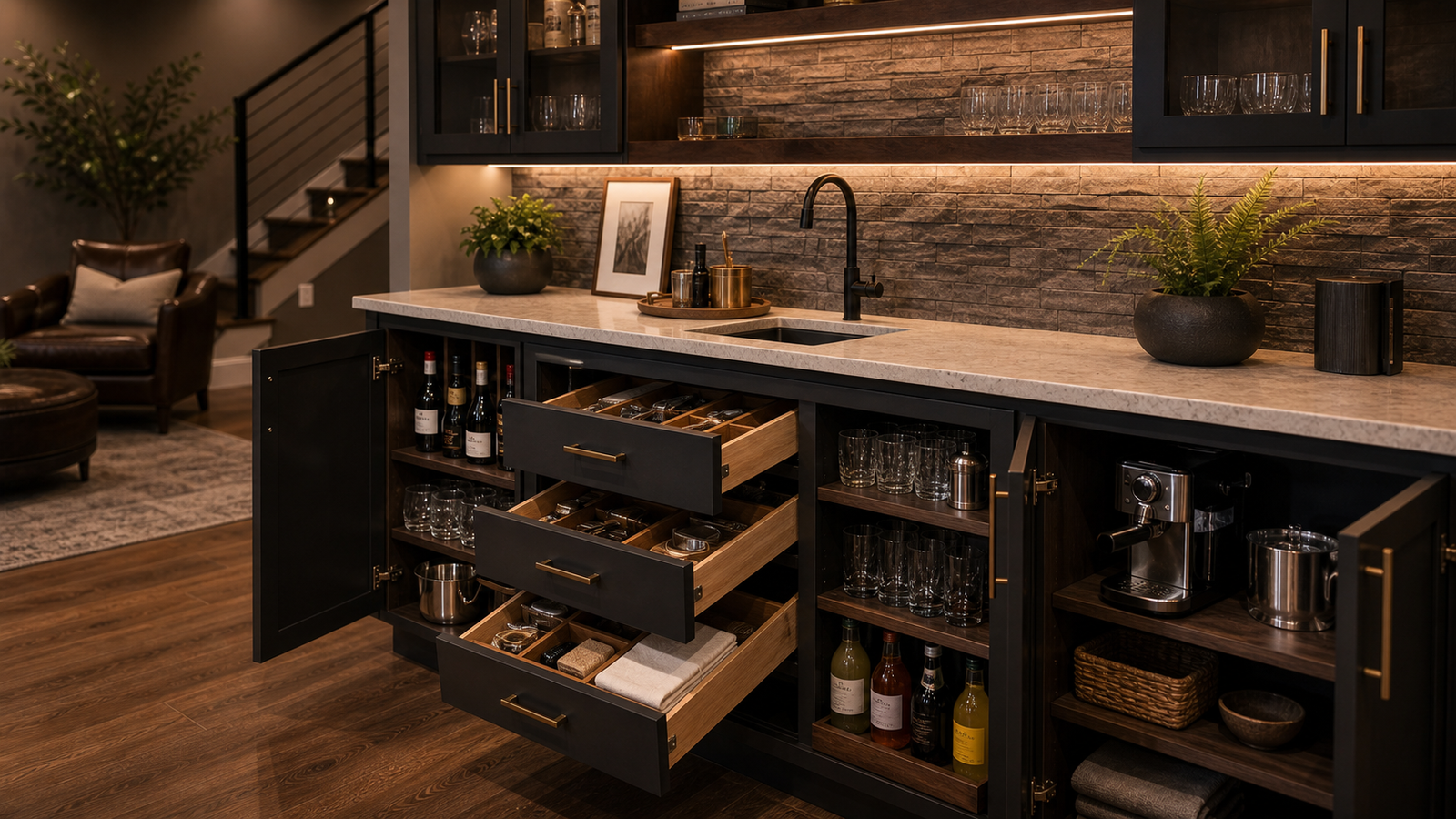
- Bottles: display them on open shelves or behind glass doors, or keep them out of sight in a base cabinet.
- Glassware: show it off on open shelving, protect it in upper cabinets, or store it in drawers with dividers.
- Bar tools: corkscrews, openers, strainers, and jiggers are easiest to find in a dedicated drawer near the mixing area.
- Mixers and napkins: keep frequently used items at counter level and overflow stock lower or higher.
- Small appliances: ice makers, blenders, and beverage fridges need both space and a nearby, code-compliant outlet.
For a deeper system of bins, dividers, and rail organizers, see our home bar storage ideas.
Match the Cabinet Layout to How You Serve Drinks
If you mix drinks often, keep the most-used items close to the counter. A base cabinet with drawers, a small refrigerator, and open shelving above creates an efficient setup without taking over the room. If your basement bar is mostly decorative, a freestanding cabinet or console may be all you need.
Professional storage planning follows real ergonomics. The National Kitchen & Bath Association (NKBA) publishes planning guidelines covering storage frontage, clearances, and how cabinet doors and drawers should swing without colliding — useful reference points even for a bar that is smaller than a full kitchen.
Cabinet Height and Depth
Height and depth shape both capacity and comfort. Low cabinets can double as a serving counter, while taller cabinets create a strong built-in look and hold more bottles or glassware. In a small basement bar, shallow cabinets help preserve walking space; in a larger bar, deeper cabinets support appliances, sinks, and more serious storage.
Leave enough room to work. As a general rule, plan roughly 36 to 42 inches of clearance behind the bar so doors and drawers open freely and a bartender can move while guests are seated. Our basement bar layout guide covers straight, L-shaped, and U-shaped configurations in more detail.
Cabinet Styles That Support the Whole Room
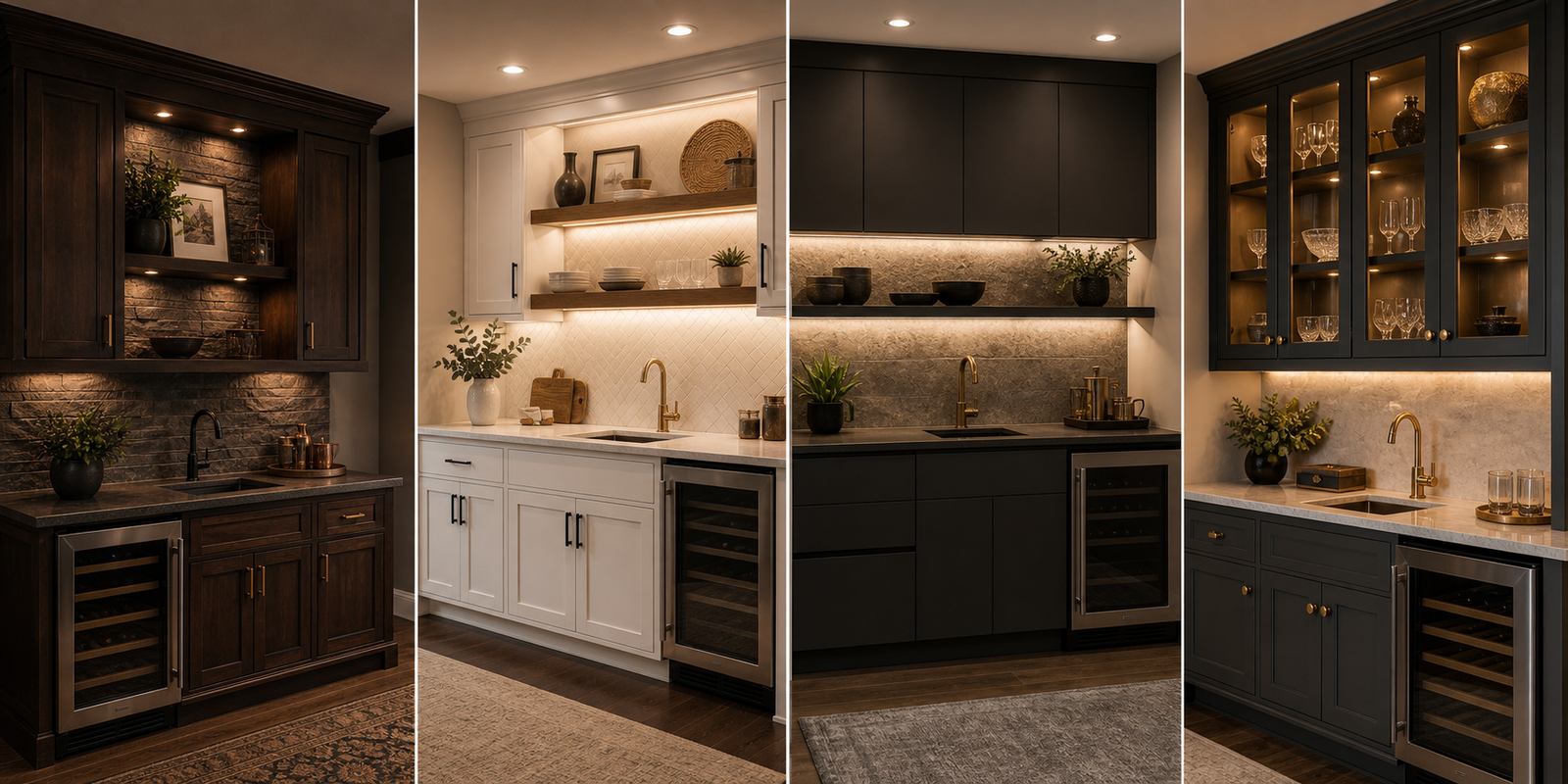
Basement bar cabinets do not have to be plain or traditional. The finish and hardware you choose can shift the entire mood without a complicated remodel.
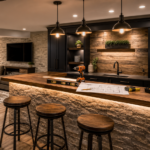
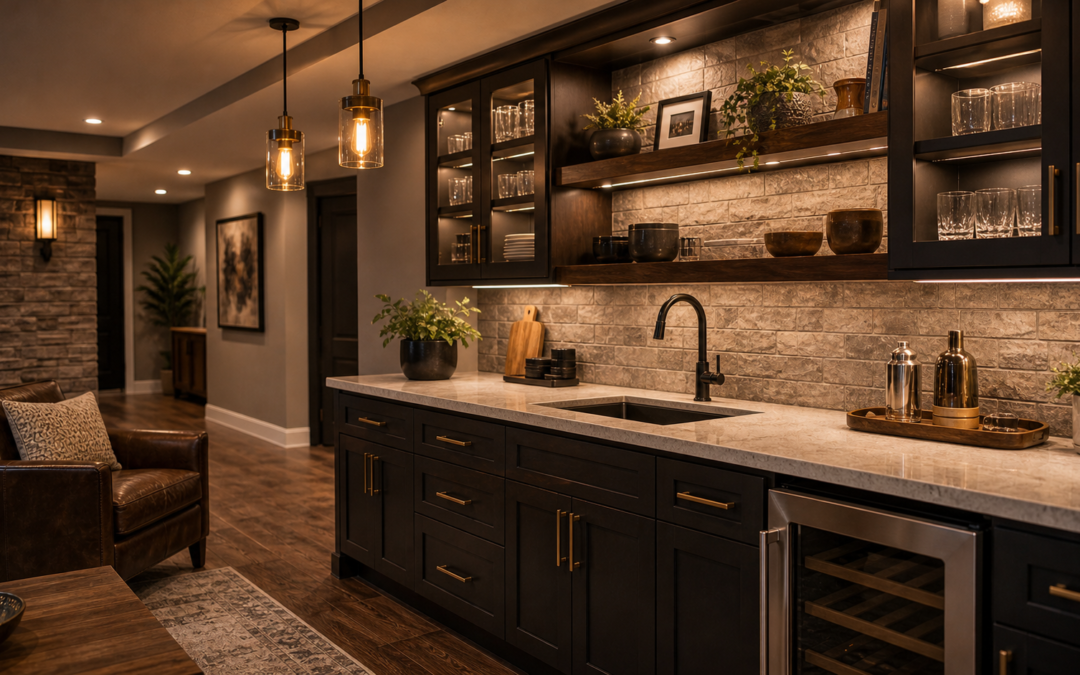
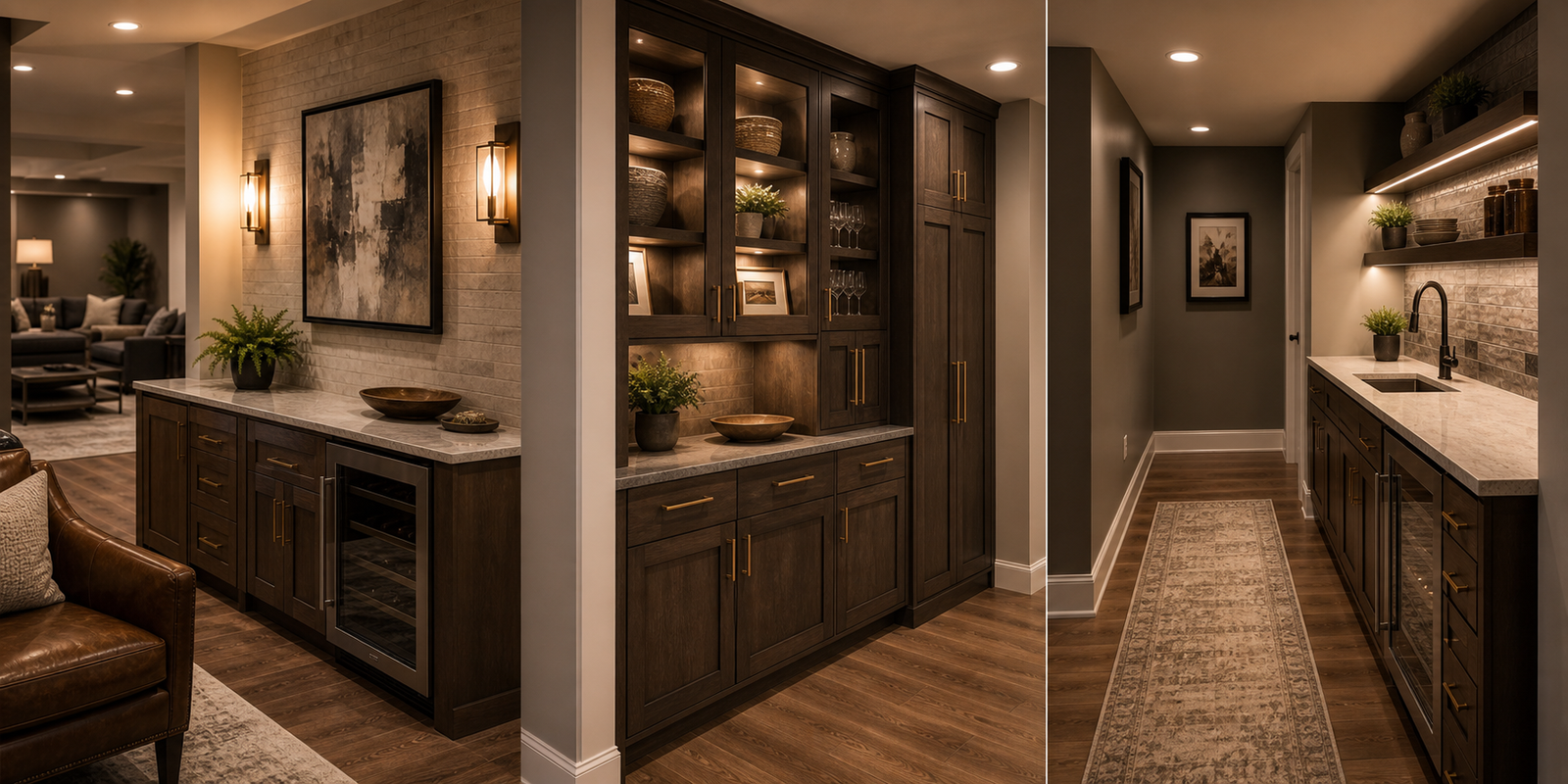
- Dark wood: creates a classic pub or speakeasy feeling and hides wear well.
- Painted cabinets: brighten a basement that lacks natural light; light and cool tones feel more open.
- Flat-front (slab) cabinets: clean and seamless for a modern basement bar.
- Glass-door cabinets: show off glassware and bottles and make a small bar feel larger.
- Open shelving: keeps everyday items within reach and lightens the look of a wall of cabinetry.
Tie the cabinet style to your overall concept. Our basement bar themes guide walks through modern, rustic pub, countryside, and club looks, and the basement bar lighting ideas post shows how under-cabinet and in-cabinet lighting changes the feel after dark.
Choosing the Right Basement Bar Countertop
The countertop is one of the first surfaces a guest notices and the one that takes the most abuse from spills, ice, and glassware. In a basement, the material also has to tolerate humidity, so balance looks against durability and maintenance.
The Natural Stone Institute is a helpful authority on stone selection, sealing, and care, and its guidance on cleanability and sealing is worth reading before you commit to a natural-stone top.
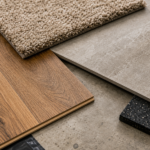
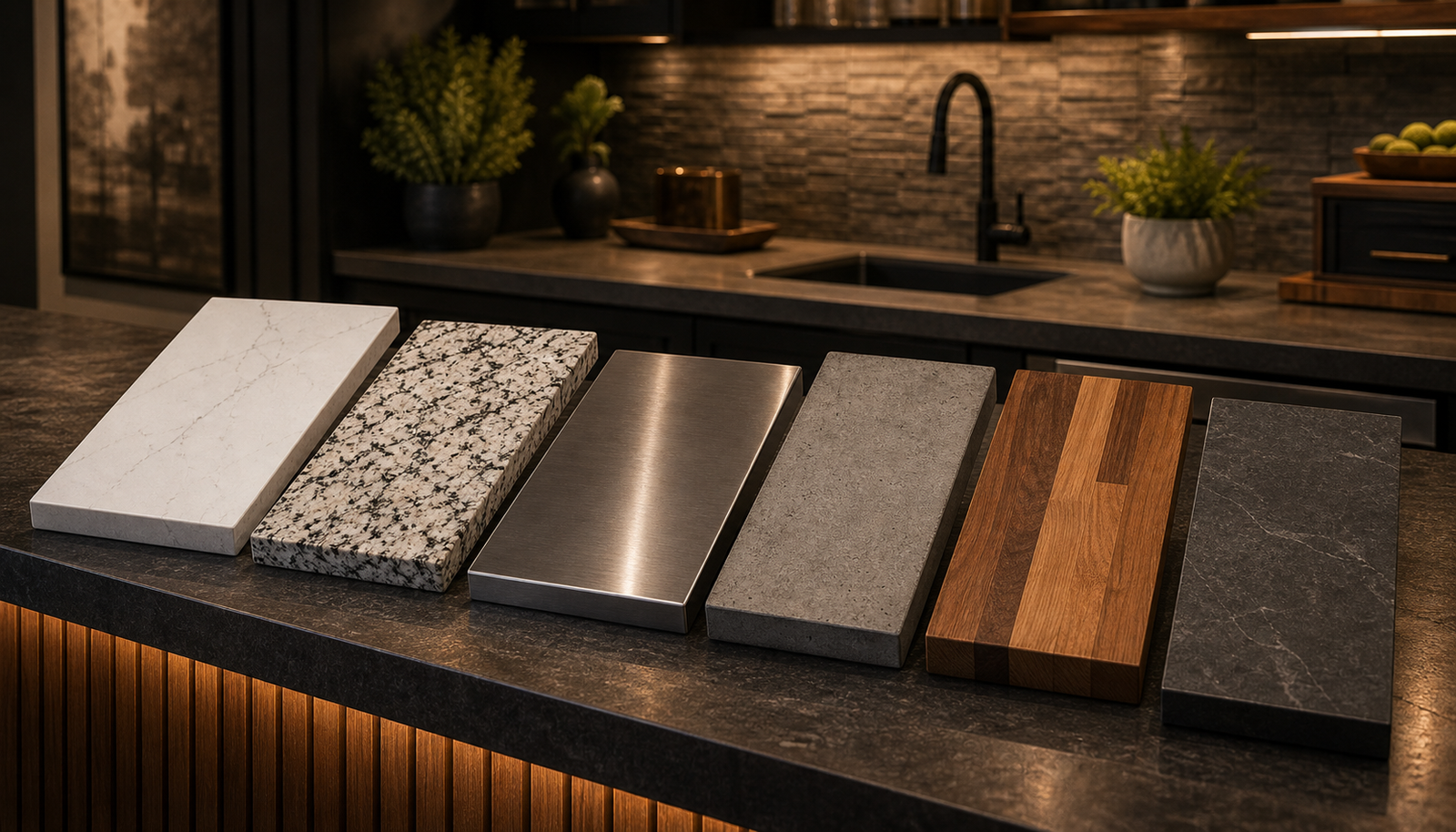
Popular Countertop Materials Compared
Here is how the most common basement bar countertop options stack up:
| Material | Best For | Maintenance | Moisture Notes |
|---|---|---|---|
| Quartz (engineered) | Low-fuss durability | Very low; no sealing | Non-porous; excellent for damp basements |
| Granite | Classic, high-end look | Periodic sealing | Naturally durable; seal to limit moisture migration |
| Stainless steel | Modern or industrial bars | Wipe clean; shows smudges | Excellent; rust-resistant and hygienic |
| Concrete | Custom, industrial style | Seal and re-seal | Good when sealed; can stain if untreated |
| Butcher block | Warm rustic and country looks | Oil regularly; seal edges | Needs sealing; vulnerable near a wet bar sink |
| Laminate | Tight budgets and high traffic | Easy; just wipe | Good if seams are sealed against water |
Quartz
Engineered quartz combines durability with beauty. It is dense and non-porous, never needs sealing, resists stains and bacteria, and comes in a wide range of colors and patterns, which makes it one of the most practical choices for a basement bar.
Granite
Granite is the classic option — sophisticated, long-lasting, and a striking accent in almost any style. Its appeal reaches well beyond the kitchen into basements, family rooms, and built-in bars. Many granites benefit from periodic sealing; the Natural Stone Institute's sealing guidance explains when and why.
Stainless Steel
Stainless steel gives a space a clean, modern look, or a distinctive industrial edge in a more rustic room. It is hygienic, heat-tolerant, and shrugs off moisture, though it shows fingerprints and can scratch.
Concrete and Butcher Block
Concrete delivers a custom, industrial feel and can be tinted and shaped to fit, but it must be sealed and re-sealed to resist stains. Butcher block brings warmth to rustic and country themes and is budget-friendly, but it needs regular oiling and careful sealing, especially near a wet bar sink.
For a full breakdown of cost, edge profiles, and finishes, see our bar countertop materials guide.
Moisture and Code Considerations for Basement Cabinets and Counters
Because basements sit below grade, cabinets and countertops face more humidity than they would upstairs. A few precautions protect your investment and keep the build compliant.
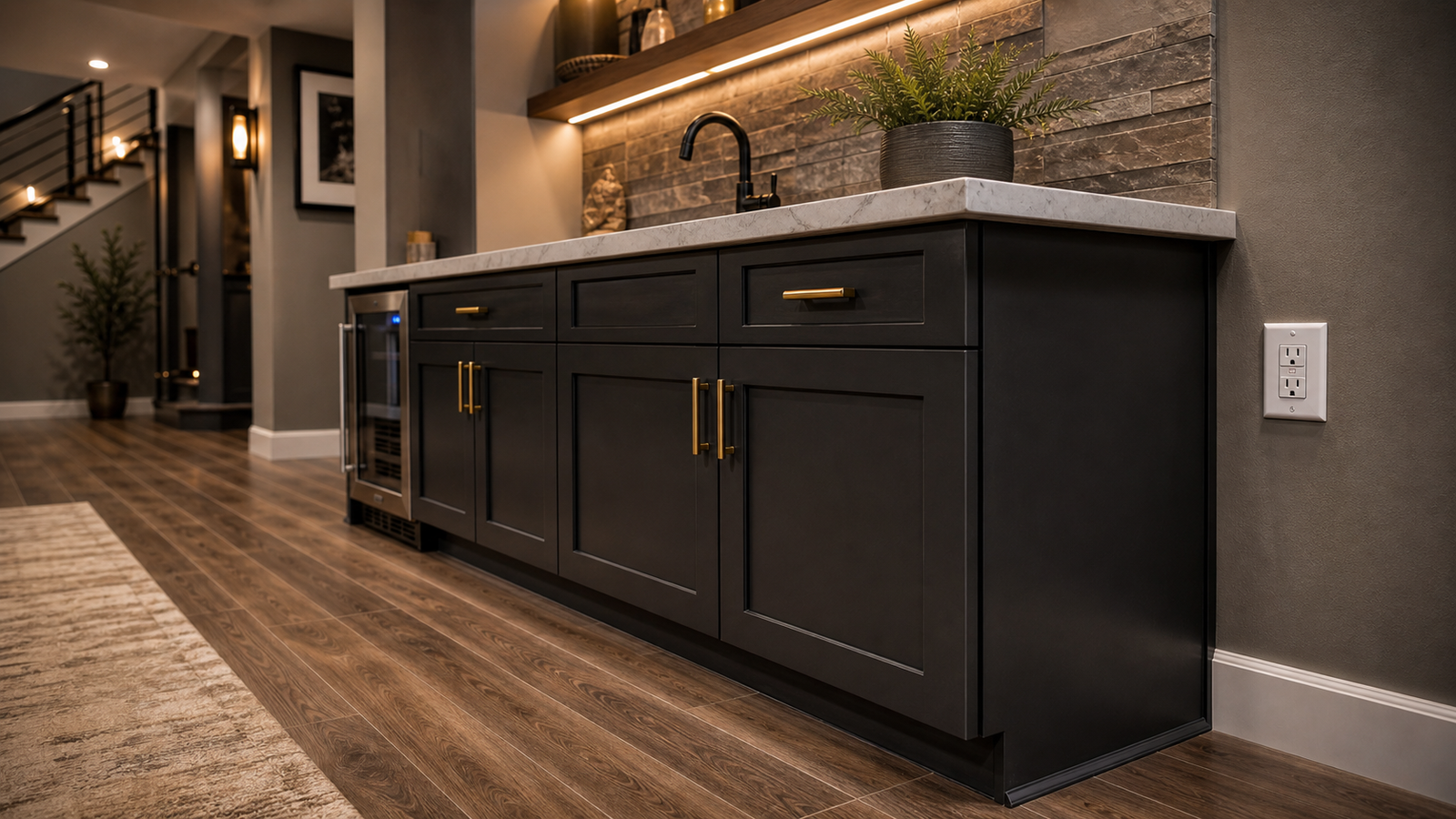
- Choose moisture-tolerant materials: non-porous counters and sealed or moisture-resistant cabinet boxes hold up best.
- Lift cabinets off the slab: a toe kick and a moisture barrier reduce the risk of wicking and warping.
- Control humidity: a dehumidifier and good ventilation keep doors and finishes from swelling.
- Plan electrical safely: appliances inside or beside cabinets need properly placed, protected outlets.
Two authorities are worth bookmarking. The U.S. EPA's mold and moisture guidance explains how to keep humidity in check, and under the National Electrical Code (NFPA 70), basement receptacles require GFCI protection — important once you add a fridge, ice maker, or blender at the bar. For the broader build, the International Residential Code governs ceiling height and egress. Local codes always take precedence, so confirm with your building department.
See our basement finishing ideas guide for waterproofing and framing steps that should happen before cabinets go in.
Where to Find Basement Bar Cabinets and Countertops
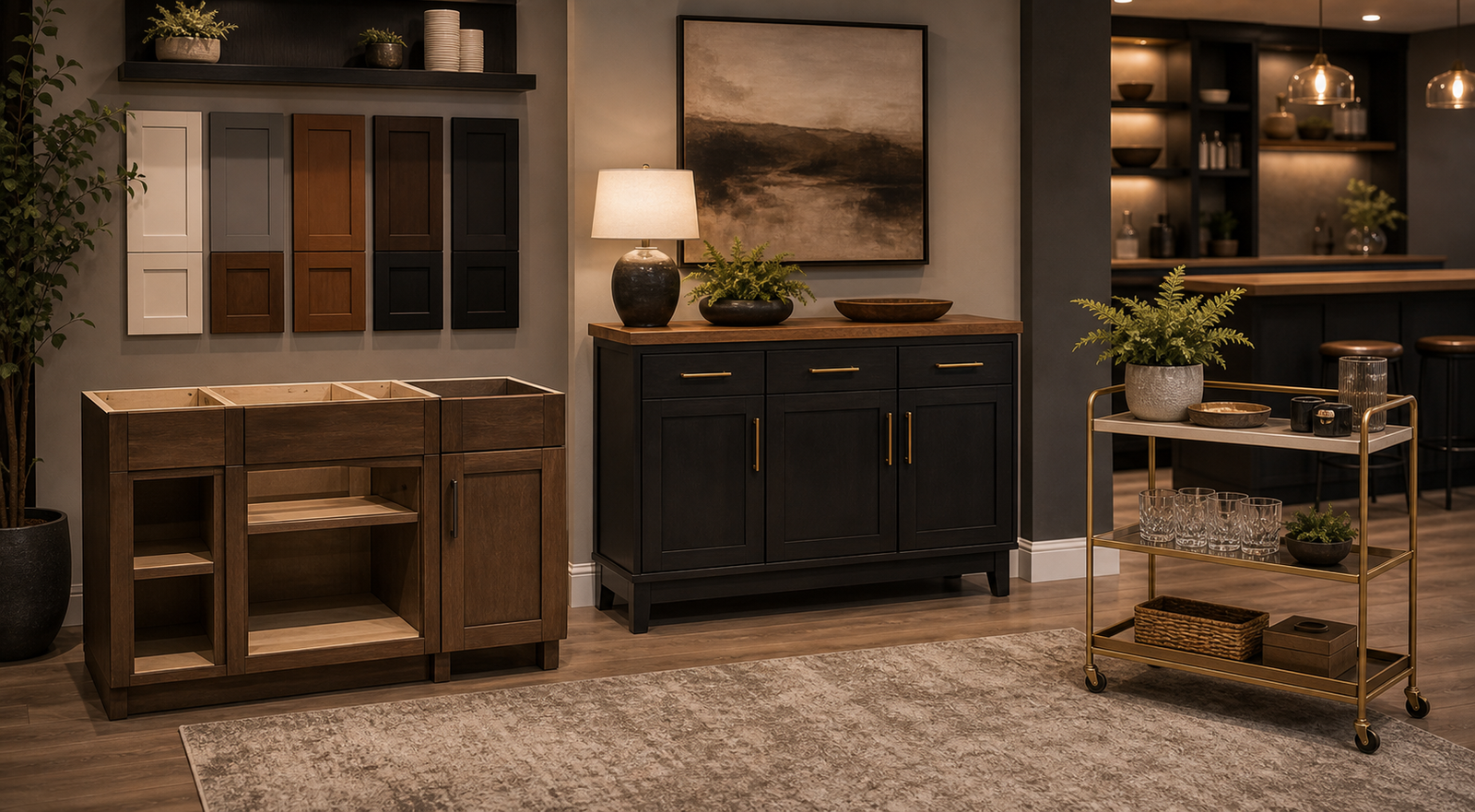
You can source cabinets and counters across a wide price range, from ready-to-assemble units to custom millwork. A few well-known retailers cover most needs:
- The Home Depot — stock and semi-custom cabinets plus countertop fabrication (homedepot.com).
- Lowe's — cabinets, hardware, and countertop services (lowes.com).
- IKEA — budget-friendly modular cabinets that adapt well to small bars (ikea.com).
- Wayfair — a large selection of freestanding bar cabinets and bar carts (wayfair.com).
For a built-in look on a budget, mix stock base cabinets with open shelving and a single statement countertop. For a freestanding option, a quality bar cabinet or console can stand in until you are ready to commit to cabinetry.
Pair your storage with the right seating using our bar stool buying guide.
Bringing Cabinets and Countertops Together
The best cabinet and countertop choice is both attractive and practical. It should make the basement bar easier to use, keep clutter under control, and fit the way your home already looks. Coordinate the two: a warm butcher-block top suits painted or wood cabinets in a country theme, while a quartz or stainless top pairs naturally with flat-front cabinets in a modern bar.
With thoughtful storage and a durable surface, your basement bar will feel more comfortable for everyday use and more polished when guests come over. Start with the contents you need to store, choose materials that respect basement moisture, and let one clear style guide both the cabinets and the counter.
Frequently Asked Questions
What is the best countertop material for a basement bar?
Quartz is the most low-maintenance choice because it is non-porous and never needs sealing, which suits a humid basement. Granite and stainless steel are also excellent; butcher block and concrete look great but need sealing and more care.
Do basement bar cabinets need to be moisture-resistant?
Yes. Basements carry more humidity than upper floors, so choose sealed or moisture-resistant cabinet boxes, lift them off the slab with a toe kick and moisture barrier, and run a dehumidifier to prevent warping.
How deep should basement bar cabinets be?
It depends on space. Shallow cabinets preserve walking room in a narrow basement, while standard base-cabinet depth (around 24 inches) supports appliances, sinks, and heavier storage in a larger bar. Leave about 36 to 42 inches of clearance behind the bar.
Can I use kitchen cabinets for a basement bar?
Absolutely. Stock or semi-custom kitchen base and wall cabinets are a common, cost-effective way to build a basement bar. Just confirm they are rated or sealed for the moisture levels in your space.
Do I need a GFCI outlet for a bar fridge or ice maker?
In most jurisdictions, yes. Recent National Electrical Code cycles require GFCI protection for basement receptacles, including those serving a bar fridge, ice maker, or blender. Have a licensed electrician confirm and install the circuits.
Keep planning your build with our related guides:
basement bar ideas, home bar storage ideas, and bar countertop materials.